
Looking for FAQs: Answers to Common Questions About Home Pickling Cucumbers and Other Vegetables and Fruit in 2025? Scroll down this page and follow the links. And if you bring home some fruit or vegetables and want to can, freeze, make jam, salsa or pickles, see this page for simple, reliable, illustrated canning, freezing or preserving directions. There are plenty of other related resources, click on the resources dropdown above. If you are having a hard time finding canning lids, I've used these, and they're a great price & ship in 2 days.
If you have questions or feedback, please let me know! There are affiliate links on this page. Read our disclosure policy to learn more.
FAQs: Answers to Common Questions About Home Pickling Cucumbers and Other Vegetables and Fruit
Answers to Common Pickling Problems
FAQs for making pickles
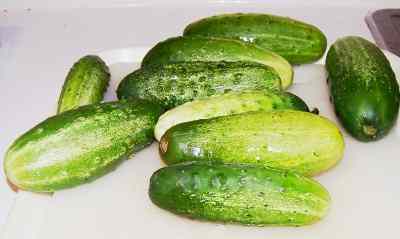 Making
and canning your own pickles, gherkins, kosher dills, bread and butter,
sweet pickles, etc. is one of the easiest things you can do with produce!
Here's how to do it, in easy steps and completely illustrated.
It is much faster than the old method your grandmother used with tons of
pickling salt and de-scumming the brine! Ugh! This method is so easy,
ANYONE can do this! It's a great thing to do with your kids! I'm
experimenting with the various techniques, such as soaking the cucumbers
overnight in lime solution first, using "pickle crisp" etc. I'' revise this
page as I taste the results in the weeks to come!
Making
and canning your own pickles, gherkins, kosher dills, bread and butter,
sweet pickles, etc. is one of the easiest things you can do with produce!
Here's how to do it, in easy steps and completely illustrated.
It is much faster than the old method your grandmother used with tons of
pickling salt and de-scumming the brine! Ugh! This method is so easy,
ANYONE can do this! It's a great thing to do with your kids! I'm
experimenting with the various techniques, such as soaking the cucumbers
overnight in lime solution first, using "pickle crisp" etc. I'' revise this
page as I taste the results in the weeks to come!
Types of Pickles
- Fresh-pack (or quick process) pickles are cured for several hours in a vinegar solution or are immediately combined with hot vinegar, spices, and seasonings. Examples include dills, bread-and-butter pickles and pickled beets. Quick Process is what these instructions show. Other types are:
- Fermented pickles are vegetables soaked in a brine solution for 4 to 6 weeks. During this time, lactic acid bacteria, naturally present on the surface of vegetables, grows. Other microbes are inhibited by salt. The color of the vegetables changes from bright green to olive/yellow-green, and the white interior becomes translucent. Examples include dill pickles and sauerkraut.
- Refrigerated dills are cucumbers fermented for 1 week in a salt brine and then stored in the refrigerator for up to 2 months.
- Fruit pickles are whole or sliced fruit simmered in a spicy, sweet-sour syrup. Examples include spiced peaches and crabapples.
- Relishes are made from chopped fruits or vegetables that are cooked to a desired consistency in a spicy vinegar solution. Examples include corn relish and horseradish.
Pickles seem to have their own unique problems in canning. Poorly home-canned pickles may be soft or slippery, shriveled, hollow, too dark, have black spots, be faded, have a bitter flavor or develop white sediment at the bottom of the jar.
Some factors that affect pickle quality:
- Growing conditions of the cucumbers.
- Time of day picked.
- How the cukes were stored (refrigerator) after picking and how long before pickling.
- Too high processing temperature or processing omitted.
- Brine too weak (for those recipes that use brine).
- Vinegar solution too dilute or too strong.
- Hard water.
Answers to Common Questions
Salt
Can I use flaked salt for pickling?
Most recipes call for granulated pickling salt or canning salt. Flake salt varies in density and is not recommended for pickling,
Can I reduce the amount of salt used? I am out a reduced-salt diet for my heart / blood pressure.
Yes. Except for fermented pickle recipes (like sauerkraut), the salt is NOT there for safety. That is the job of the acidifier, vinegar. So here are ways you can reduce the salt:
1. Use less salt in the recipe (down to zero salt)
2. Substitute Reduced-sodium salts (such as potassium chloride). However, the pickles may have a slightly different taste.
3. Rinse or soak: When you go to eat the pickles, rinse and/or soak in plain water them to decrease the salt (and the acid) - especially if you are going to eat them right away. If you going to eat them "later" (after more than 2 hours), then you will need to store them in the refrigerator.
References:
- Oregon State University
- Penn State University - With the exception of fermented pickles and sauerkraut, salt is an optional ingredient. Salt can be omitted for canning tomatoes, vegetables, meats, poultry, and seafood since the amount added does not contribute to the safety of the food. However, in fermented sauerkraut and brined pickles, salt not only provides characteristic flavor but also is vital to safety since it favors the growth of desirable bacteria while inhibiting the growth of others. Therefore, do not attempt to make sauerkraut or fermented pickles by cutting back on the salt required.
- National Center for Home Food Preservation:
Is it safe to can food without salt? Yes. Salt is used for flavor only and is not necessary to prevent spoilage.
Is it safe to can meat and poultry without salt? Yes. Salt is used for flavor only and is not necessary for safe processing.
Crispy Crunchy Pickles / Soft Pickles
What did I do wrong if my pickles aren't crisp or crunchy?
You probably used overripe cucumbers or didn't measure the vinegar and water accurately. Of course, processing too long in the boiling water bath can do it, too! You may have noticed that the best crisp store-bought pickles are the ones stored in the refrigerators, not on the room-temperature shelves. That is because they have not been heat treated. The same is true with home pickling. To get the most crispy pickles, use the refrigerator recipes and mixes. (see this page for more info and ordering fridge pickle mixes) Overall, you will get the crispest pickles from using young, small cukes and then using a refrigerator method (See this page for refrigerated dill pickle directions) -
My pickles are not crisp. The older folk tell me I need to use alum. Why do my recipes not tell me this? I DO believe these older folk. How do I use the alum in sweet and dill pickles?
That would be because recipes and processing times have been refined over the years, and alum just doesn't make a difference any more. Liming and low temperature pasteurization largely replaced it. See this page for that recipe: https://www.pickyourown.org/pickles_oldfashionedbarrel.htm .
Here's what the USDA says about using alum in pickling:
Firming agents
Alum may be safely used to firm fermented pickles. However, it is unnecessary and is not included in the recipes in this publication. Alum does not improve the firmness of quick-process pickles. The calcium in lime definitely improves pickle firmness. Food-grade lime may be used as a lime-water solution for soaking fresh cucumbers 12 to 24 hours before pickling them. Excess lime absorbed by the cucumbers must be removed to make safe pickles. To remove excess lime, drain the lime-water solution, rinse, and then resoak the cucumbers in fresh water for 1 hour. Repeat the rinsing and soaking steps two more times. To further improve pickle firmness, you may process cucumber pickles for 30 minutes in water at 180°F. This process also prevents spoilage, but the water temperature should not fall below 180°F. Use a candy or jelly thermometer to verify the water temperature.
Where can I buy pickling supplies like pickling salt, Pickle crisp, pickling lime, mixes, fermentation crocks, etc.?
See this page for pickling supplies, equipment, books, crocks and additives.
I have Ball's pre mix package of pickle mix to which you only add vinegar & water. Someone told me I can add the pickle lime in the jar, to make the pickles to be more crisp. The last time I made them this way they were mushy, so I threw out the whole bunch. I know I have to cut the ends & soak in pickle salt with water & rinse then pack, then pour vinegar bath in jars & boil to seal, but my concern is crispness in the pickle. What can I do, and is it better to do pickles in the pre pkg spice or from the recipe in the Ball Blue Book?
Be careful with lime - that's for pre-treatment only, and must be washed off before adding vinegar. Absolutely DO NOT add lime to the jar - that will neutralize the acidity in the vinegar and risk spoilage and/or food poisoning.
I suspect the pre-packaged spice will work better for you. Best of all is the refrigerator pickles - they're like Clausen and Vlassic pickles - which also must be stored in the fridge - that's why both are so crisp - they haven't been heat treated!
Why are my pickles soft?
What did I do wrong if my pickles aren't crisp or crunchy?Any of the following may cause soft pickles: failure to remove the blossom end of the cucumber, cucumbers are exposed above the brine, vinegar or brine is too weak, or pickles were precooked at too high temperature (overcooked).
You probably used overripe cucumbers or didn't measure the vinegar and water accurately. Of course, processing too long in the boiling water bath can do it, too! Adding a small fresh grape leaf to each jar helps too (there's something in them that helps kill the enzymes in the blossom end - although removing the blossom end ought to make adding the grape leaf unnecessary - see a question below) and finally, Ball's and others making a commercial product called "Pickle crisp" that helps.
I have a friend that is looking for something to keep her pickles crisp. I have found on the internet pickle crisp. Do you know of something else to use or some kind of trick to ensure crisp pickles?
I've heard of many. The best tip is be sure to remove and discard a 1/16-inch slice from the blossom end of fresh cucumbers. Blossoms may contain an enzyme which causes excessive softening of pickles. Some people swear by adding a small young grape leaf to each jar.
Alum (see above) has been shown not to improve the firmness of quick-process pickles.
But, the calcium in lime definitely does improve pickle firmness. Here's how to use it: Food-grade lime may be used as a lime-water solution for soaking fresh cucumbers 12 to 24 hours before pickling them. Excess lime absorbed by the cucumbers must be removed to make safe pickles. To remove excess lime, drain the lime-water solution, rinse, and then re-soak the cucumbers in fresh water for 1 hour. Repeat the rinsing and soaking steps two more times. To further improve pickle firmness, you may process cucumber pickles for 30 minutes in water at 180°F. This process also prevents spoilage, but the water temperature should not fall below 180°F. Use a candy or jelly thermometer to verify the water temperature.
Pickle Crisp, made by Ball, was discontinued around late 2007, but returned to the market in 2013! I guess popular demand brought it back! I've used it and found it works; others have written in to say they have seen imporved crispness in their pickles, using it.
Cloudiness and color
Why are my pickles cloudy?
There are a variety of possible causes for cloudy pickles:
In nonfermented pickles (fresh pack), cloudiness might indicate spoilage. Yeast growth may also make pickles cloudy or slimy. Check the pickles for signs of off-odors and mushiness of the pickles. If yeast growth is evident, discard the pickles. If these signs are absent, the pickles are (absent other problems) safe to eat.
Be sure to use a NON-metal pot - or a coated metal (teflon, silverstone, enamel, etc.) without breaks in the coating. The metal, especially aluminum, reacts with the vinegar and makes the pickle solution turn cloudy. This is the most common cause of cloudy pickles. There is no danger to these pickles, though!
Sometimes the fillers and additives (such as anticaking agents) in regular table salt may cause slight cloudiness, so always use pickling salt. Obviously, if you used a packet mix (like Mrs. Wages) this should not be a problem.
Hard water might also cause cloudiness. If soft water is not available, boil the hard water and let it sit undisturbed overnight. Pour off the top portion and use it in the pickling solution.
I have now found a white coating on the pickles in the jars...yikes! I left them alone in the cold room for months and almost all the white coating has fallen off and is at the bottom of the jar. What is it? Is it still safe to eat these pickles?"
Assuming those are not fermented pickles, typically, that just means you used a salt that contains an anti-caking agent. The pickles should be safe. Next time use canning or pickling salt.
Why did the liquid in my dill pickles turn pink?
Using overmature dill may cause this. If so, the product is still safe. However, yeast growth could also cause this. If yeast growth is evident, discard the pickles.
Why did the garlic cloves in my pickles turn green, purple or bluish green?
According to the USDA, greenish or blue coloration, sometimes even purple or pink-ish, is a chemical reaction that is usually due to:
- iron, tin or aluminum in your cooking pot, water or water pipes reacting with the pigments in the garlic. Or,
- the garlic may naturally have more bluish pigment, and it is more evident after pickling.
To prevent:
- Immature bulbs should be cured two to four weeks at 70 ° F.
- Use distilled water, or other water that is known to be soft, free of metals,
- Use cooking pots and utensils that are either ceramic lined (without cracks), Teflon/Silverstone, glass or high quality stainless steel
Storage, jars and sealing
How long will fridge pickles last in the refrigerator?
The pickles will last a good long time; longer than the packets of mix say they will. I've had them last anywhere for 3 months to 8 months; especially if you sanitize the jars in boiling water for 5 minutes and clean the lids and warm them in hot water, wash the cucumbers well with plain water (by hand). Of course, if you have a fridge that maintains a consistent 33 F (just above freezing), that helps, too!
I would think under ideal conditions they could last a year.
After I can my pickles, if a jar does NOT seal, is it still good? Can I still eat the pickles?
As long as you refrigerate the jar soon after it cools to room temperature, yes. Of course, since it isn't sealed, it won't last forever even in the fridge, so just treat it as you would any other fresh food.
Miscellaneous
I just read through your website to help figure out how to pickle my vast supply of cucumbers. Can you use the same recipe for peeled sliced cucumbers?
Yes, if you wanted to peel them, you could. That would be ok with any pickling recipe on the website.
Is it possible to can cabbage without pickling it and if so do you have a recipe for it?
When making quick process pickles, can I store any leftover pickling solution for future use?I'm afraid not. It is so low in acidity, it is not safe. The only USDA approved recipes for home canning cabbage are pickling cabbage and sauerkraut.
I don't have the type of dill my recipe calls for. What can I substitute?If the pickling solution is fresh and has not been used to make pickles, cover it and store it in the refrigerator for later use. If the pickling solution has been used, it can be stored in the refrigerator and reused in a day or two for barbecue sauce, cole slaw dressing or a marinade. If mold growth occurs, throw it out.
For each quart, try 3 heads of fresh dill or 1 to 2 tablespoons dill seed (dill weed = 2 tablespoons).
Can I use burpless cucumbers for pickling?
Burpless cucumbers are not recommended for use in fermented pickles. This is because at their normal mature size, they produce an enzyme that causes the pickles to soften during fermentation. However, if smaller burpless cucumbers (those with small seed) are used, they may be suitable for making fresh pack pickles.
I have an old recipe that calls for adding a grape leaf to each jar of pickles. Why?
Grape leaves contain a substance that inhibits enzymes that make pickles soft. However, if you remove the blossom end of the cucumbers (the source of undesirable enzymes) you don't need to add grape leaves.
Can I ferment pickles in a new plastic garbage can?
The plastic needs to be food-grade. Pickles and sauerkraut can be fermented in large stoneware crocks, large glass jars or food-grade plastic containers. If you're not sure if a plastic container is safe for food, read its label or contact its manufacturer. Another option is to line a questionable container with several thicknesses of food-grade plastic bags. Do not use aluminum, copper, brass, galvanized or iron containers for fermenting pickles or sauerkraut.
My favorite pickle recipe is from my grandmother and does not call for a boiling water bath process. Do I really need to process pickles?
Processing is necessary for all pickles and relishes to destroy the yeasts, molds and bacteria that may cause the product to spoil and also to inactivate enzymes that could affect color, flavor and texture of the pickled product. Process pickled products for the length of time specified in the recipe. If no time is given, process the product for at least 10 minutes.
Carefully place the filled jars onto a rack in the canner containing hot water. The water should be deep enough to cover the jars by at least 1 inch. Cover the canner and bring the water to a boil. Start counting processing time as soon as the water begins to boil.
My neighbor gave me some pickles he made by just pouring vinegar over fresh cucumbers. Are they safe?
Cucumbers, hot peppers, hard-cooked eggs and horseradish can be put in sanitized jars, covered with hot vinegar, and stored in the refrigerator. However, to make a safe product, the jar and lid must be sanitized, only pure 5 percent acidity vinegar used, and the product must be stored in the refrigerator. Herbs, like dill, can be added.
I have been making some wonderful flavored vinegars. Can these homemade vinegars be used to make pickles?
Save the homemade or flavored vinegars for things like salads. When making pickles, use only commercially produced 5 percent acidity cider or white vinegar. The acidity level of homemade vinegars is unknown and may make the pickles unsafe. The acid level is on the label of the vinegar.
I accidentally limed my pickles in an aluminum pan. Will they be safe to eat?
Aluminum is not recommended for use with lime because the lime can "pit" the container, increasing the aluminum content of the finished product. This is not a procedure that you would want to do each time you made pickles and then use the product. However, one batch of pickles should not cause health problems. If the container, however, is badly pitted, the best option would be to discard the product.
I would like to make sweet pickles, but I am diabetic. Can I use an artificial sweetener?
The best approach is to take dill pickle slices, rinse to remove the salty flavor and sprinkle with artificial sweetener. Allow these to sit in the refrigerator at least 30 minutes before use. Substituting artificial sweeteners for the sugar in sweet pickle recipes is not recommended.
For more information on making pickles request HGIC 3100, Pickle Basics; HGIC 3420, Pickled Cucumbers; HGIC 3400, Pickled Foods; HGIC 3440, Pickled Peppers; and HGIC 3380, Dill Pickles and sauerkraut from your local Agriculture Extension Service.
REMEDIES FOR PICKLING PROBLEMS
PROBLEM |
CAUSE |
PREVENTION |
| Soft or slippery pickles (if spoilage is evident, do not eat) | A brine is too weak | Maintain salt concentration specified in recipe. |
| Vinegar is too weak. | Use vinegar of 5 percent acidity. | |
| Cucumbers stored at too high a temperature during curing/brining. | Store cucumbers between 70 and 75 ºF. This is the optimum temperature for growth of the organisms necessary for fermentation. | |
| Insufficient amount of brine. | Keep cucumbers immersed in the brine. | |
| Pickles not processed properly (to destroy microorganisms). | Process in a boiling-water canner for the specified time indicated for the product. As in all canning, a seal is necessary on the jar to prevent other microorganisms from entering. | |
| Moldy garlic or spices. | Always use fresh spices. | |
| Blossom ends not removed. | Always remove blossom ends. | |
| Strong, bitter taste | Spices cooked too long in vinegar, or too many spices used. | Follow directions for amount of spices to use and the boiling time. |
| Vinegar too strong. | Use vinegar of the proper strength (5-percent acidity). | |
| Dry weather. | No prevention. Bitter taste is usually in the peeling. | |
| Using salt substitutes. | Potassium chloride ingredient in these is naturally bitter. | |
| Hollow pickles | Cucumbers too large for brining. | Use smaller cucumbers for brining. |
| Improper curing. | Keep brine proper strength and the product well-covered. Cure until fermentation is complete. | |
| Long lapse of time between gathering and brining. | Pickling process should be started within 24 hours after gathering. | |
| Faulty growth of cucumber. | None. During washing, hollow cucumbers usually float. Remove and use for relish. | |
| Shriveled pickles | Placing cucumbers in too-strong brine, too heavy syrup or too strong vinegar. | Follow a reliable recipe. Use amounts of salt and sugar called for in recipe, and vinegar that is 5-percent acidity. |
| Long lapse of time between gathering and brining. | Brine within 24 hours after gathering. | |
| Over-cooking or over-processing. | Follow a reliable recipe exactly. | |
| Dry weather. | No prevention. | |
| Scum on brine surfaces while curing cucumbers | Wild yeasts, molds and bacteria that feed on the acid, thus reducing the concentration if allowed to accumulate. | Remove scum as often as needed. |
| Dark or discolored pickles (if brass, copper or zinc utensils were used do not use the pickles) | Minerals in hard water. | Use soft water. |
| Ground spices used. | Use whole spices. | |
| Spices left in pickles. | Place spices loosely in cheesecloth bag so they can be removed before canning. | |
| Brass, iron, copper or zinc utensils used. | Use unchipped enamelware, glass, stainless steel or stoneware utensils. | |
| Iodized salt used. | Use canning or pickling salt. | |
| Spotted, dull or faded color. | Cucumbers not well cured (brined). | Use brine of proper concentration. Complete fermentation process. |
| Excessive exposure to light. | Store in a dark, dry, cool place. | |
| Cucumber of poor quality. | Work with good-quality produce. | |
| White sediment in crock or jar. | Bacteria cause this during fermentation. | None. |
| Salt contains an anti-caking agent. | Use canning or pickling salt. |
See these pages for other FAQs
- General Canning Process
- Why do I need a canner?
- Pressure Canning
- Can I use a water-bath canner instead of a Pressure Canner for low acid foods like green beans?
- Jars, Lids and Containers and popping noises!
- Spoilage, leaks and sealing,
- Additives and Ingredients
- Using honey in place of sugar
- Vegetables
- Squash and pumpkins
- Fruits
- Jams and Jellies
- Meats
- Miscellaneous Questions
- Free Resources About Storing
Picking Tips
[General picking tips and a guide to each fruit and vegetable] [How
much do I need to pick?
(Yields - how much raw makes how much cooked or frozen)] [Selecting
the right varieties to pick] [All
about apple varieties - which to pick and why!] [Picking tips for Vegetables]
[ Strawberry picking tips]
[ Blueberries picking tips]
Illustrated Canning, Freezing, Jam Instructions and Recipes
[ All About Home Canning, Freezing and Making Jams, Pickles, Sauces, etc. ] [FAQs - Answers to common questions and problems] [Recommended books about home canning, jam making, drying and preserving!] [Free canning publications to download and print]
Home Canning Kits
This is the same type of standard canner that my grandmother used to make everything from applesauce to jams and jellies to tomato and spaghetti sauce. This complete kit includes everything you need and lasts for years: the canner, jar rack, jar grabber tongs, lid lifting wand, a plastic funnel, labels, bubble freer. It's much cheaper than buying the items separately. You'll never need anything else except jars & lids (and the jars are reusable)! There is also a simple kit with just the canner and rack, and a pressure canner, if you want to do vegetables (other than tomatoes). To see
more canners, of different styles, makes and prices, click here!
Don't forget the Ball Blue Book!
