Looking for How to Make Fig Preserves (Fig Jam) - Easily! With Step-by-step Photos, Recipe, Directions, Ingredients and Costs in 2024? Scroll down this page and follow the links. And if you bring home some fruit or vegetables and want to can, freeze, make jam, salsa or pickles, see this page for simple, reliable, illustrated canning, freezing or preserving directions. There are plenty of other related resources, click on the resources dropdown above. If you are having a hard time finding canning lids, I've used these, and they're a great price & ship in 2 days.
If you have questions or feedback, please let me know! There are affiliate links on this page. Read our disclosure policy to learn more.
How to Make Fig Preserves (Fig Jam) - Easily! With Step-by-step Photos, Recipe, Directions, Ingredients and Costs
How to Make Homemade Fig Jam - Easily!
Making and canning your own fig jam is easy. If you've never tasted it, homemade fig jam is quite amazing. If you like strawberry jam, you will love fig jam. Here's how to make it, in 13 easy steps and completely illustrated. These directions work equally well for regular sugar, low sugar, fruit juice-sweetened and Stevia (in a prepared form like Truvia, it measures same as sugar; if you use another form, you will need do your own conversion) - or Splenda, if you prefer, -sweetened jam. Any variations will be spelled out in the directions inside the pectin, and below!For more information about figs, see Fig Picking Tips. See this page for directions about how to can figs. See this page for how to make fig-strawberry jam. See this page for Blueberry Jam directions, and for strawberry, blackberry, raspberry, peach, etc., and other types of jam, see this jam-making page!
For easy applesauce or apple butter directions, click on these links.
Ingredients
- Figs - fresh figs - about 2 dozen large figs like Brown
Turkey or 40 smaller ones, like Celeste - in either case, in total,
about 3 to 5 lbs (it depends on the density of the figs, which varies
quite a bit based on weather, variety and degree of ripeness) makes 7
jars (8 ounces each) of jam.
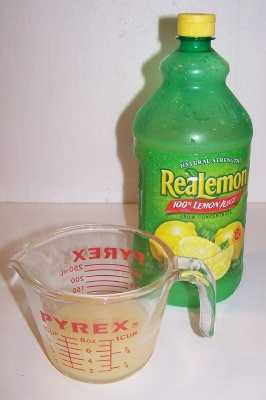
- Lemon juice - 1/4 cup fresh squeezed or bottled lemon juice. Canning food scientists recommend bottled, for the consistency of its acidity.
- Water - 1/2 cup
- Cinnamon - 1/4 teaspoon - optional!
- Pectin - 1 and a half packages (box usually) or if you get it in bulk, 5 Tablespoons, see the directions below for specifics - (it's a natural product, made from apples and available at grocery stores (season - spring through late summer) and local "big box" stores. It usually goes for about $2.00 to $2.50 per box. You will get best results with no-sugar needed pectin, whether you choose to add sugar or not! See here for more information about how to choose the type of pectin to use. If you can't get any pectin and need to make fig jam without pectin, see this page.
- Sugar - About 4.5 cups of dry, granulated (table) sugar, if you use the low or no-sugar pectin; otherwise 7 cups of sugar are needed for the full sugar pectin. It is possible to make low-sugar, fruit juice-sweetened, or Stevia (in a prepared form like Truvia, it measures same as sugar; if you use another form, you will need do your own conversion) - or Splenda, if you prefer, -sweetened fig jam; I'll point out the differences below.
Equipment
- 1 large pot; I prefer 16 to 20 quart Nonstick ceramic coated pots for easy cleanup.
- Large spoons and ladles,
- 1 Water Bath Canner (a huge pot to sanitize the jars after filling (about $30 to $35 at mall kitchen stores, sometimes at big box stores and grocery stores.). Note: we sell canners and supplies here, too - at excellent prices - and it helps support this web site!
- all jars (Grocery stores, like Publix, Kroger, Safeway carry them, as do some big box stores - about $7 per dozen 8 ounce jars including the lids and rings)
- Jar funnel ($5 at Target, other big box stores, and often grocery stores; and available online - see this page) or order it as part of the kit with the Jar grabber .
- Jar grabber (to pick up the hot jars)- Big box stores and
grocery stores sometimes carry them; and it is available online - see
this page. It's a tremendously useful to put jars in the canner
and take the hot jars out (without scalding yourself!). The kit sold
below has everything you need, and at a pretty good price:
- Lids - thin, flat, round metal lids with a gum binder that seals them against the top of the jar. They may only be used once.
- Rings - metal bands that secure the lids to the jars. They may be reused many times.
Optional stuff:
- Foley Food Mill - not necessary; useful if you want to remove seeds (from blackberries) or make applesauce.
- Lid lifter (has a magnet to pick the lids out of the almost-boiling water where you sanitize them. ($4 at big box stores or it comes in the kit at left)
Fig Jam-making Directions
This example shows you how to make fig jam; regular or with added seasoning. The yield from this recipe is about 7 eight-ounce jars (which is the same as 3.5 pints).
 Step
1 - Pick the figs! (or buy them already picked)
Step
1 - Pick the figs! (or buy them already picked)
It's fun to go pick your own and you can obviously get better quality ones!
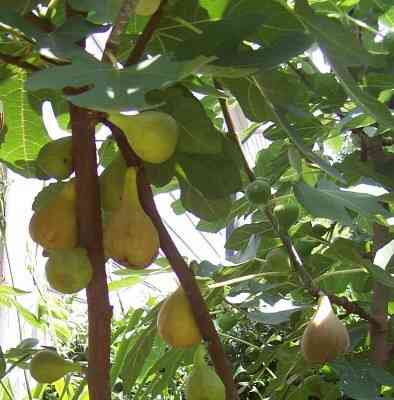
At right is a picture I took of figs from my own tree - these are a variety called Celeste - see this page for more information on various types of figs, how to select the variety and how to pick them!
To pick your own, here is a list and links to the pick your own farms. just select your area!
FYI, Figs are REALLY easy to grow and also make an attractive landscaping tree!
Step 2 - How much fruit?
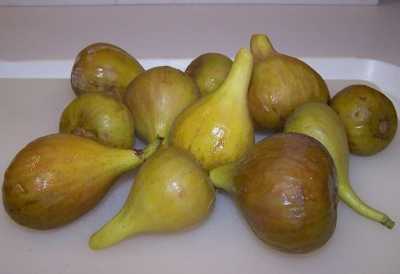 Jam can ONLY be made in rather small batches - up to about 6 cups at a
time - like the directions on the pectin say, DO NOT increase the recipes
or the jam won't "set" (jell, thicken). It takes about 3 to 5 lbs or
roughly 2 dozen medium to large figs to produce the 5 cups of prepared
(peeled, sliced or chopped) fig pulp to make 1 batch of fig jam, yielding
7 jars, each 8 ounces in size.
Jam can ONLY be made in rather small batches - up to about 6 cups at a
time - like the directions on the pectin say, DO NOT increase the recipes
or the jam won't "set" (jell, thicken). It takes about 3 to 5 lbs or
roughly 2 dozen medium to large figs to produce the 5 cups of prepared
(peeled, sliced or chopped) fig pulp to make 1 batch of fig jam, yielding
7 jars, each 8 ounces in size.
 Step
3 - Wash the jars and lids
Step
3 - Wash the jars and lids
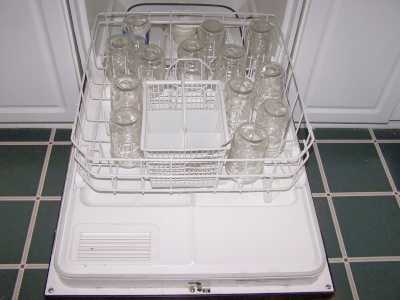
Now's a good time to get the jars ready, so you won't be rushed later. The dishwasher is fine for the jars; especially if it has a "sanitize" cycle, the water bath processing will sanitize them as well as the contents! If you don't have a dishwasher with a sanitize cycle, you can wash the containers in hot, soapy water and rinse, then sanitize the jars by boiling them 10 minutes, and keep the jars in hot water until they are used.
NOTE: If a canning recipe calls for 10 minutes or more of process time in the canner, then the jars do not need to be "sanitized" before filling them. But really, sanitizing them first is just good hygeine and common sense! See this page for more detail about cleaning and sanitizing jars and lids.
Put the lids into a pan of hot, but not quite boiling water (that's what the manufacturer's recommend) for 10 minutes, and use the magnetic "lid lifter wand" to pull them out.
Leave the jars in the dishwasher on "heated dry" until you are ready to use them. Keeping them hot will prevent the jars from breaking when you fill them with the hot jam. Some newer dishwashers even have a "sanitize" setting.
Step 4 - Get the lids warming in hot (but not boiling) water
Lids: put the very hot (but not quite boiling; around 180 F, steaming water is fine)
water (or on the stove in a pot
of water on low heat) for at least several minutes; to soften up the gummed
surface and clean and sanitize the lids.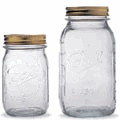
 Need
lids, rings and replacement jars?
Need
lids, rings and replacement jars?
Get them all here, delivered direct to your home, at the best prices on the internet!
 Step
5 -Wash and cut up the figs!
Step
5 -Wash and cut up the figs!
I'm sure you can figure out how to gently wash the fruit in plain cold water.
You need to cut off the stems and the bottom of the
fig, but you do not need to peel them - you CAN peel them if you want to.
I only peel the grody* looking ones (example photo below)
(* knarly, gross, yucky)
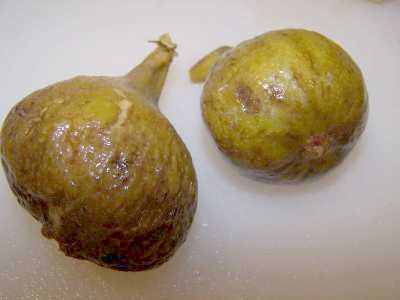
At left, sample figs with unappealing peels (skins). If the skin looks fine, I chop it up, but if the skins are tough, think or unappealing like these...
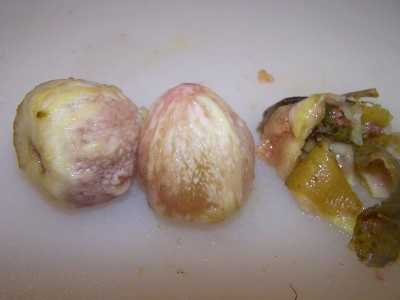
I peel ----->
 At
left is a sample slice of a perfectly ripe but not over-ripe fig. It
depends on the variety, but generally, they should be pink/yellowish and not
brown inside....
At
left is a sample slice of a perfectly ripe but not over-ripe fig. It
depends on the variety, but generally, they should be pink/yellowish and not
brown inside....
Some recipes call for the figs to sit in boiling water for 5 to 15 minutes to "check or tenderize the skins. Since the skins have no flavor, I'd rather remove them if they are thick or tough... otherwise, just chop them up along with the rest of the fig.
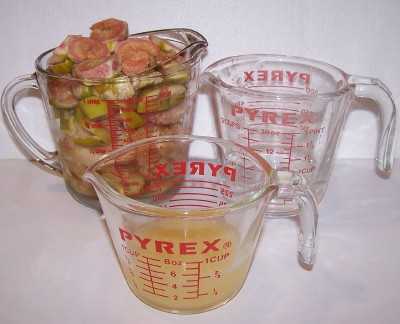
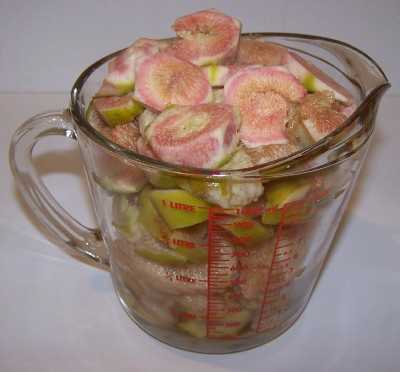 You will need 4 to 5 cups (maximum 5 cups) of crushed figs. You will notice, I just
heap them in a 4-cup measuring cup, to account for the air spaces. That's
about 5 cups, probably only 4 if I crushed them and packed them down more.
It doesn't need to be precise. (Believe me, I get emails from the
obsessive-compulsives... sigh)
You will need 4 to 5 cups (maximum 5 cups) of crushed figs. You will notice, I just
heap them in a 4-cup measuring cup, to account for the air spaces. That's
about 5 cups, probably only 4 if I crushed them and packed them down more.
It doesn't need to be precise. (Believe me, I get emails from the
obsessive-compulsives... sigh)
You can chop them up more, if you like, but I find they soften and break up
during cooking, and if I want smaller pieces,
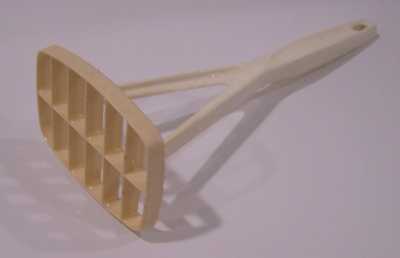 I
just use a sharp-edged plastic potato masher (shown at right) to mush them
while cooking)
I
just use a sharp-edged plastic potato masher (shown at right) to mush them
while cooking)
Step 6 - Measure out the sweetener
Depending upon which type of jam you're making (sugar, no-sugar, Stevia (but you will have to experiment with amount, each brand of Stevia is a different concentration), or Splenda, or a mix of sugar and Stevia (or Splenda) or fruit juice) you will need to use a different amount of sugar and type of pectin. The precise measurements are found in each and every box of pectin sold.
| Type of jam |
Type of pectin to buy |
Sweetener |
| regular | no-sugar or regular | 7 cups of sugar |
| low sugar | no-sugar | 4.5 cups of sugar |
| lower sugar | no-sugar | 2 cups sugar and 2 cups Splenda (or about 1/3 that if you use Stevia, which is my preference) |
| no sugar | no-sugar | 4 cups Splenda (or about 1/3 that if you use Stevia, which is my preference) |
| natural | no-sugar | 3 cups fruit juice (grape, peach, apple or mixed) |
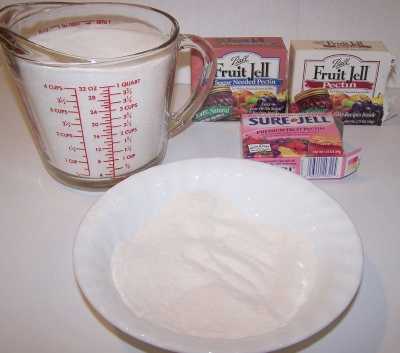 Mix
the dry pectin with about 1/4 cup of sugar or other sweetener and Keep this
separate from the rest of the sugar. If you are not using sugar, you will just
have to stir more vigorously to prevent the pectin from clumping.
Mix
the dry pectin with about 1/4 cup of sugar or other sweetener and Keep this
separate from the rest of the sugar. If you are not using sugar, you will just
have to stir more vigorously to prevent the pectin from clumping.
For more about the types of pectin sold, see this page!
Notes:
- Nutrasweet (aspartame) will NOT work - it breaks down during heating).
- Stevia (in a prepared form like Truvia, it measures same as sugar; if you use another form, you will need do your own conversion) - or Splenda, if you prefer, (sucralose)
substitutes exactly with sugar BUT even the manufacturers of Splenda
will tell you that you get best results if you just use a 50-50 mix;
half regular sugar and half Stevia (in a prepared form like Truvia, it measures same as sugar; if you use another form, you will need do your own conversion) - or Splenda, if you prefer, .
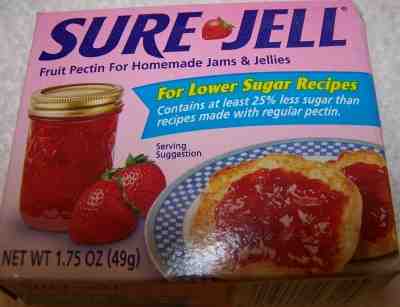
- Sugar not only affects the sweetness, but also the color and flavor. It does not affect the preserving or spoilage properties - that has to do with acid and the processing method.
- you can use "no sugar" pectin in place of "low sugar" pectin - you can still add sugar or other sweeteners.
Step 7 - Mix the figs with the pectin and bring to a full boil
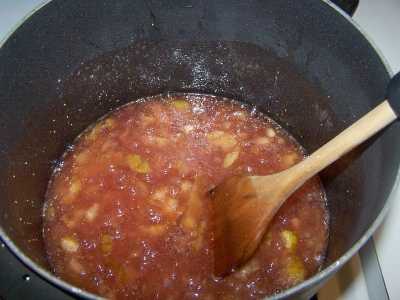 Mix the figs (4 to 5 cups), pectin (1 packet
or 1.5 packets if you like it firm), water (1/2 cup) and
lemon juice (1/4 cup) in the pot on the stove and get it cooking.
Mix the figs (4 to 5 cups), pectin (1 packet
or 1.5 packets if you like it firm), water (1/2 cup) and
lemon juice (1/4 cup) in the pot on the stove and get it cooking.
Notes about pectin: I usually add about 25% - 30% more pectin (just open another pack and add a little) or else the jam is runnier than I like. With a little practice, you will find out exactly how much pectin to get the thickness you like.
Is your jam too runny? Pectin enables you to turn out perfectly set jam every time. Made from natural apples, there are also natural no-sugar pectins that allow you to reduce the sugar you add by half or even eliminate sugar!
Get canning jars, rings, lids and pectin deliverd:
Step 8 - Add the remaining sugar and bring to a boil
 When the fig mix has reached a full boil, add the rest of the sugar or
other sweetener, and then bring it back to a boil and boil hard
for 1 minute.
When the fig mix has reached a full boil, add the rest of the sugar or
other sweetener, and then bring it back to a boil and boil hard
for 1 minute.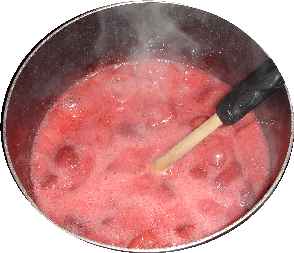
Step 9 - Skim any excessive foam
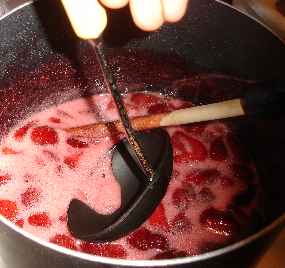 Foam...
What is it? Just jam with a lot of air from the boiling.
Foam...
What is it? Just jam with a lot of air from the boiling. 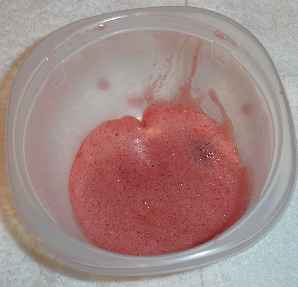 But it tastes more like, well, foam, that jam, so most people remove it.
It is harmless, though. Some people add 1 teaspoon of butter or margarine
to the mix in step 6 to reduce foaming, but food experts debate whether that may
contribute to earlier spoilage, so I usually omit it and skim.
But it tastes more like, well, foam, that jam, so most people remove it.
It is harmless, though. Some people add 1 teaspoon of butter or margarine
to the mix in step 6 to reduce foaming, but food experts debate whether that may
contribute to earlier spoilage, so I usually omit it and skim.
But save the skimmed foam! You can recover jam from it to use fresh! See this page for directions!
 Step
10 - Testing for "jell" (thickness)
Step
10 - Testing for "jell" (thickness)
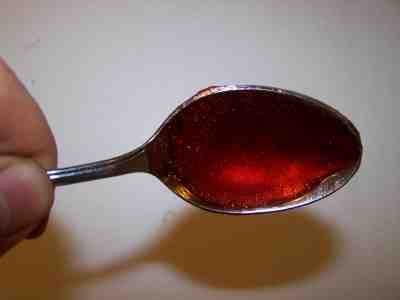
I keep a metal tablespoon sitting in a glass of ice water, then take a half spoonful of the mix and let it cool to room temperature on the spoon. If it thickens up to the consistency I like, then I know the jam is ready. If not, I mix in a little more pectin (about 1/s to 1/2 of another package) and bring it to a boil again for 1 minute. Get a few jars out of the dishwasher (still hot) and get your funnel, lid lifter and ladle ready. I put an old towel down - it makes cleanup easier.
Step 11 - Let stand for 5 minutes and stir completely.
Why? Otherwise, the fruit will often float to the top of the jar. This isn't a particular problem; you can always stir the jars later when you open them; but some people get fussy about everything being "just so", so I've included this step! Skipping this step won't affect the quality of the jam at all.
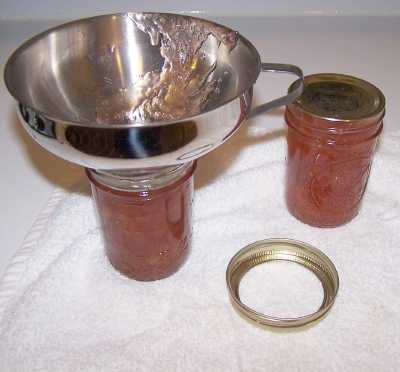
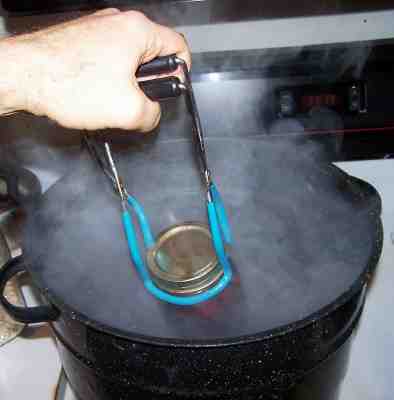
Step 12 - Fill the jars and put the lid and rings on
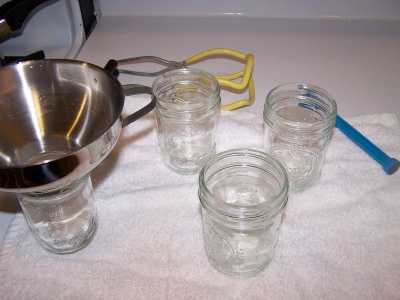 Fill them to within 1/4-inch of the top, wipe any spilled jam off the
top, seat the lid and tighten the ring around them.
Fill them to within 1/4-inch of the top, wipe any spilled jam off the
top, seat the lid and tighten the ring around them.
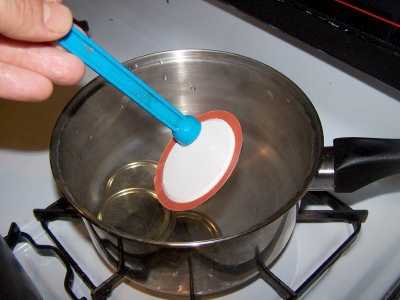 This
is where the jar tongs and lid lifter come in really handy!
This
is where the jar tongs and lid lifter come in really handy!
 Step
13 - Process the jars in the boiling water bath
Step
13 - Process the jars in the boiling water bath
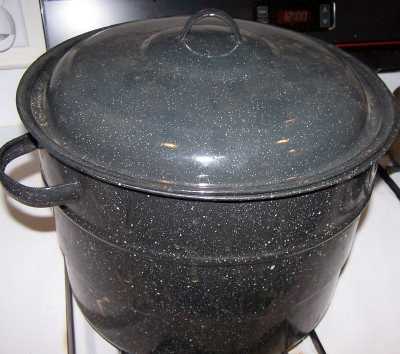
Keep the jars covered with at least 2 inches of water. Keep the water
boiling. In general, boil them for 5 minutes. I say "in general"
because you have to process (boil) them longer at higher altitudes than sea
level, or if you use larger jars, or if you did not
 sanitize
the jars and lids right before using them. The directions inside every
box of pectin will tell you exactly. The directions on the pectin tend
to be pretty conservative. Clemson University says you only need to
process them for 5 minutes. I usually hedge my bets and start pulling
them out after 7 minutes, and the last jars were probably in for 10. I
rarely have a jar spoil, so it must work.
sanitize
the jars and lids right before using them. The directions inside every
box of pectin will tell you exactly. The directions on the pectin tend
to be pretty conservative. Clemson University says you only need to
process them for 5 minutes. I usually hedge my bets and start pulling
them out after 7 minutes, and the last jars were probably in for 10. I
rarely have a jar spoil, so it must work.
Note: Some people don't even boil the jars; they just ladle it hot into hot jars, but putting the jars in the boiling water bath REALLY helps to reduce spoilage! To me, it makes little sense to put all the working into making the jam and then not to process the jars to be sure they don't spoil!
 Step
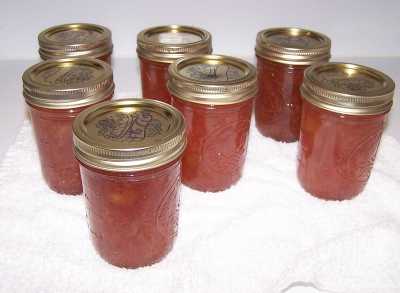
14 - Remove and cool the jars - Done!
Step
14 - Remove and cool the jars - Done!
Lift the jars out of the water and let them cool without touching or bumping them in a draft-free place (usually takes overnight) You can then remove the rings if you like, but if you leave them on, at least loosen them quite a bit, so they don't rust in place due to trapped moisture. Once the jars are cool, you can check that they are sealed verifying that the lid has been sucked down. Just press in the center, gently, with your finger. If it pops up and down (often making a popping sound), it is not sealed. If you put the jar in the refrigerator right away, you can still use it. Some people replace the lid and reprocess the jar, then that's a bit iffy. If you heat the contents back up, re-jar them (with a new lid) and the full time in the canner, it's usually ok.
Once cooled, they're ready to store. I find they last about 18 months. After that, the get darker in color and start to get runny. They still seem safe to eat, but the flavor is bland. So eat them in the first 12 to 18 months after you prepare them!
Other Equipment:From left to right:
|
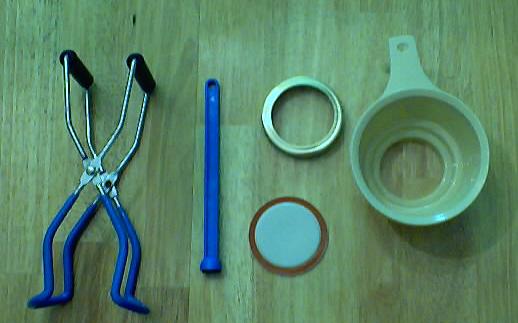 You can get all of the tools in a kit here: See here for related tools, equipment, supplies on Amazon |
Summary - Cost of Making Homemade Fig Jam - makes 7 jars, 8 oz each** |
||||
| Item | Quantity | Cost in 2024 | Source | Subtotal |
| Figs | 5 lbs (about 1 gallon) | $9.00/gallon | Pick your own | $9.00 |
| Canning jars (8 oz size), includes lids and rings | 7 jars | $11/dozen 8 oz jars or $0.92/jar |
Grocery stores, like Public, Kroger, Safeway and sometimes, Big Lots, local hardware stores and big box stores | $5.00 |
| Sugar | 4.5 cups | $1.25 | Grocery stores, like Public, Kroger, Safeway and sometimes, Big Lots, local hardware stores and big box stores | $1.25 |
| Pectin (low sugar, dry) | 1 and a third boxes * | $2.00 per box in 2013 | Grocery stores, like Public, Kroger, Safeway and sometimes, Big Lots, local hardware stores and big box stores | $2.75 |
| Total | $18.00 total or about $2.57 per jar |
|||
|
* - This assumes you already have the pots, pans, ladles,, and reusable equipment. Note that you can reuse the jars! If you already have jars or reuse them, just buy new lids (the rings are reusable, but the flat lids are not)! |
||||
Can't find the equipment? We ship to all 50 states!
Use our Feedback form!
Answers to Common Questions
Comments, Tips and Feedback:
|

Looking for canning equipment and supplies?
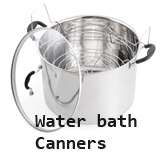
Water bath canner with a jar rack
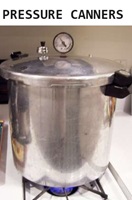
Pressure canners for gas, electric and induction stoves: Presto 23Qt or T-fal 22Qt
Canning scoop (this one is PERFECT)
Ball Blue book (most recent version)
Find Other types of farms:
- Easter egg hunts
- Children's consignment sales
- Farm markets and roadside stands
- Road trips and camping resources
- Local Honey, apiaries, beekeepers
- Local Meat, Milk and Eggs
- Consumer fraud and scams information
- Home canning supplies at the best prices on the internet!
- Maple Syrup Farms, sugarworks, maple syrup festivals
- Environmental information and resources
- Farms For Your Event for birthday parties, weddings, receptions, business meetings, retreats, etc.
- Festivals - local fruit and vegetable festivals
- Pumpkin patches and corn mazes
- Christmas Tree Farms and lots
Get the
most recent version of
the Ball Blue Book
Get the
most recent version of
the Ball Blue Book of Home Canning
Find other types of farms:
- Easter egg hunts
- Children's consignment sales
- Farm markets and roadside stands
- Local Honey
- Local Meat, Milk and Eggs
- Road trip and camping
- Pumpkin patches and corn mazes
- Christmas Tree Farms and lots
- Maple Syrup farms and sugarworks
Highly rated canning supplies:
- Regular Mouth Canning Lids with food-grade with BPA Free Silicone seals for Ball, Kerr Jars for Canning
- Canning accessories kit: funnel, jar tongs, lid lifter, etc
- Food Dehydrator, 400W Electric with 8 Trays, 48 hour Timer and Temperature Control 95-176℉, BPA-Free
- Water Bath Canner, 21 Qts with lid, Jar Rack, Speckled Black, cans 7 quart jars, 9 pint jars or 13 half-pint jars
- Air Fryer: Instant Pot Instant Vortex Plus XL 8QT Clear Windows, Custom Programming, 8-in-1 Functions that Crisps, Broils, Roasts, Dehydrates, Bakes, Reheats
- Pressure canner: All American 921, 21.5qt Pressure Cooker/Canner, never needs gaskets, Great for Gas, Electric or Flat Top Stoves - Made in the USA
- The Backyard Homestead:a guide to homesteading , on 1/4 acre, how to raise grains and vegetables; raise animals for meat, eggs, and dairy; and keep honey bees
- Smart silent HEPA Air Purifiers for Home, Large Rooms for Allergies, Smoke, Pets. Eliminates 99.97% of Dust, Pet Hair, Odors