Looking for Strawberries Facts in 2025? Scroll down this page and follow the links. And if you bring home some fruit or vegetables and want to can, freeze, make jam, salsa or pickles, see this page for simple, reliable, illustrated canning, freezing or preserving directions. There are plenty of other related resources, click on the resources dropdown above. If you are having a hard time finding canning lids, I've used these, and they're a great price & ship in 2 days.
If you have questions or feedback, please let me know! There are affiliate links on this page. Read our disclosure policy to learn more.
What's in season in July 2025, and other timely information:
Notes for July 2025: Spring is here! Strawberry season is here. It started in February in Florida, Texas, southern California and a few other areas of the Deep South; then March along the Gulf coast, April in the Deep South and west coast, May through much of the country, and June in northern areas. Blueberries are next, about a month later. Of course, cool weather crops, like Rhubarb, asparagus and greens should be available almost everywhere. Check your area's crop calendar (see this page) and call your local farms for seasonal updates.
You may also be interested in finding a local:
- Children's Consignment Sale happening now; save money on children's clothes, toys, books, etc, find a local children's consignment sale, also often held by churches in the Spring and Fall, click here!
- Fun factory tours - usually free, fun and educational, find them in every state here!
- Road trip or a Camping trip - Find free and low-cost, but fun, interesting places to visit and things to do and see!
Are carpenter bees boring holes into your house, shed or barn? There is a simple non-toxic solution!
NEW! Start your own tomato, pepper, squash and other vegetable plants from seed - It's easy and
costs about 50 cents per plant.
Also see our Master list of tomato varieties,
with descriptions, details and links to ordering the seeds.
We also have home canning, preserving, drying and freezing directions. You can access recipes and other resources from the drop down menus at the top of the page or the site search. If you have any questions or suggestions, feel free to write me! It is easy to make your own ice cream, even gelato, or low fat or low sugar ice cream - see this page. Also note, there are many copycat website listing U-pick farms now. They have all copied their information from here and usually do not ever update. Since 2002, I've been updating the information every day but Christmas; so if you see anything wrong or outdated, please write me!
Strawberries: Facts and Strawberry Trivia
See this page for easy strawberry jam and preserves recipes and complete directions. And this page shows you how to freeze strawberries to use later!
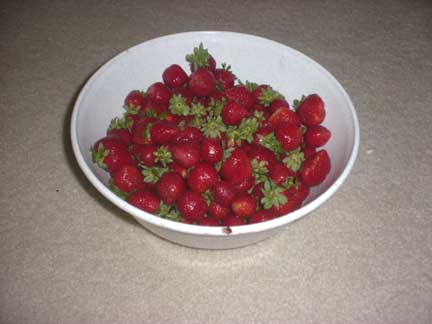
- Berries on a straw? There is a legend that strawberries were named in the nineteenth-century by English children who picked the fruit, strung them on grass straws and sold them as "Straws of berries". Another theory is the name was derived from the nineteenth-century practice (ands still today, although most farms use raised beds, enclosed in plastic) of placing straw around the growing berry plants to protect the ripening fruit. But the most widely held view is that the name Strawberry was derived from the berries that are "strewn" about on the plants, and the name "strewn berry" eventually morphed into "Strawberry".
- Fragrant - The strawberry belongs to the genus Fragraria in the rose family, along with apples and plums. The name of the scientific classification was derived from the Old Latin word for fragrant. The modern Italian word for strawberry is still "Fragola".
- Very berry or not? The strawberry is not classified by botanists as a true berry. True berries, such as blueberries and cranberries have seeds inside. The strawberry, however has its dry, yellow "seeds" on the outside (each of which is actually considered a separate fruit).
- Native American Indians called strawberries "heart-seed berries" and pounded them into their traditional corn-meal bread. Discovering the great taste of the Native Americans bread, colonists decided to create their own version, which became an American favorite that we all know and love .. Strawberry Shortcake.
- Ornamental value - The English and French also found strawberries used the beautiful heart-shaped berries to landscape their gardens. In fourteenth-century France, Charles V ordered twelve hundred strawberry plants to be grown in the Royal Gardens of the Louvre.
- Lovely berries - Strawberries have long been associated with love and flirtation. At wedding breakfasts in provincial France, newlyweds traditionally were served a soup of thinned sour cream, strawberries, borage and powdered sugar. Miss that "borage"....
- Seedy characters - On the average, there are 200 tiny seeds in every strawberry. If all the strawberries produced in California this year were laid berry to berry, they'd wrap around the world 15 times. That's enough strawberries to provide every U.S. household with 12 pint baskets.
- Are you weird? Respondents to a recent national survey labeled strawberry lovers as "health conscious, fun loving, intelligent and happy." Non-strawberry lovers, on the other hand, were described as "weird, boring, stuffy--picky, fussy eaters who avoid healthy foods."
Healthy Tips and Nutritional Facts
- Eight medium-sized strawberries contain 140% of the U.S. RDA for Vitamin C. One cup of fresh strawberries provides about 88 milligrams of ascorbic acid, which more than meets the Recommended Daily Dietary allowance of 45 milligrams for the average adult. Vitamin C is well retained when the strawberries are handled carefully. Capping, injuring, cutting, or juicing, however, will reduce the vitamin content.
- Strawberries are low in calories: one cup of unsweetened strawberries has only 55 calories.
- In addition, strawberries are good sources of folic acid, potassium and fiber. Strawberries are also fat-free and low in calories.
- If you're expecting a baby, you will be very interested in some of the new discoveries about folic acid. In fact, 8 strawberries have 20% of the folic acid you need every day.
- Fresh juice from sieved strawberry pulp has a cooling effect on feverish patients. For a cooling and purifying drink, either pour water on crushed berries or chop the berries roughly and whirl in a blender with a little water.
- As part of the 5-a-day program suggested by the American Cancer Institute, strawberries can also play a part in helping you to reduce the risk of cancer or heart disease.
- Strawberry juice combined with honey will reduce inflammation or sunburn. Rub the mixture thoroughly into the skin before rinsing off with warm water and lemon juice.
California Strawberries
- From the end of September through the end of October, strawberries are planted and harvesting occurs from mid- December through mid-July in Ventura County, CA, which produces more than 27 percent of the state's strawberries. The peak harvesting season in California runs from April through June, when up to 10 million pint baskets of strawberries are shipped daily.
- The largest producing state, California harvests 83% of the strawberries grown in the U.S. on approximately 24,500 acres. And with about 5,000 commercial acres, Florida is the second largest producing state. Ideal temperature for strawberry plants should not exceed higher than 78 degrees or lower than 55 degrees.
- Every strawberry plant is hand-picked approximately every three days. This is the time in which it takes for strawberries to complete their cycle of turning from green to white to red. There is no storage of fresh strawberries. After picking, they are rushed to coolers where huge fans extract the field heat. Then they are delivered to supermarkets across the country via refrigerated trucks.
Strawberry Fun Facts and Trivia courtesy of The California Strawberry Commission
Also see this excellent PDF file from the University of California : "Strawberries: safe methods to preserve, save and enjoy"
Strawberry Recipes, Canning and Freezing Strawberries
- How to freeze strawberries!
- Strawberry jam (with pectin) (uses less sugar or honey and less cooking)
- Strawberry jam (without pectin) (requires much more sugar and cooking)
- Strawberry (and other berry) jams without sugar
- Strawberry jelly
- Strawberry-rhubarb jam!
- Homemade strawberry ice cream (regular, low fat, nonfat, low sugar, vanilla and even gelato)
- Canning strawberries
- Make gourmet chocolate-covered strawberries
- How to make fruit juice - strawberry and other berries
- Strawberry pie filling
- Easy Rhubarb-Strawberry pie
- Fig-strawberry jam
- Fig-strawberry jam, made with Jello gelatin
Strawberry desert recipes:
Strawberry Fluff
Here's a tasty desert that can also be very healthy!
- 1 (15-ounce) can fruit cocktail, or your favorite fruit, dice into 1/2 inch cubes
- 2 cups slice strawberries
- 1 (12-ounce) container of whipped cream, topping, Cool-Whip, etc. If you use a fat free version of these, it can be healthier!
- 1 (3-ounce) box wild strawberry gelatin
- 1 cup cottage cheese (large or small curd); again regular, low fat or fat free.
- Drain juice from the fruit cocktail (you can save it to drink, if you like)
- Mix all ingredients in a large bowl.
- Refrigerate overnight.
- Keep refrigerated until ready to serve
Yield: 6-8 servings.

Looking for canning equipment and supplies?
Water bath canner with a jar rack
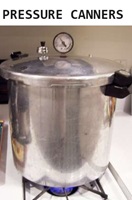
Pressure canners for gas, electric and induction stoves: Presto 23Qt or T-fal 22Qt
Canning scoop (this one is PERFECT)
Ball Blue book (most recent version)
Jars: 8oz canning jars for jams
Find Other types of farms:
Farm markets and roadside stands
Road trips and camping resources
Local Honey, apiaries, beekeepers
Consumer fraud and scams information
Home canning supplies at the best prices on the internet!
Maple Syrup Farms, sugarworks, maple syrup festivals
Environmental information and resources
Farms For Your Event for birthday parties, weddings, receptions, business meetings, retreats, etc.
Festivals - local fruit and vegetable festivals
Get the
most recent version of
the Ball Blue Book