Looking for a local, pick-your-own farm in United States? Scroll down this page and select your region of the state for a list of U-Pick farms in United States, sorted by county. Farms offering organic or sustainably grown produce are identified by the words "organic" and/or "sustainable" in Green, next to their name. If they have a website, the name will be in blue and underlined; click on it and it will open their website.
And if you know of one I missed and want to add it or correct the information, please let me know! This website is supported by purchases you make through the links to products on Amazon. As an Amazon Associate I earn from qualifying purchases. This allows me to continue to maintain the website and make improvements!
What's in season in April 2024, and other timely information:
Notes for April 2024: Spring is here! Strawberry season is here. It started in February in Florida, Texas, southern California and a few other areas of the Deep South; then March along the Gulf coast, April in the Deep South and west coast, May through much of the country, and June in northern areas. Blueberries are next, about a month later. Of course, cool weather crops, like Rhubarb, asparagus and greens should be available almost everywhere. Check your area's crop calendar (see this page) and call your local farms for seasonal updates.
Are carpenter bees boring holes into your house, shed or barn? There is a simple non-toxic solution!
You may also be interested in finding a local:
- Children's Consignment Sale happening now; save money on children's clothes, toys, books, etc, find a local children's consignment sale, also often held by churches in the Spring and Fall, click here!
- Fun factory tours - usually free, fun and educational, find them in every state here!
- Road trip or a Camping trip - Find free and low-cost, but fun, interesting places to visit and things to do and see!
We also have home canning, preserving, drying and freezing directions. You can access recipes and other resources from the drop down menus at the top of the page or the site search. If you have any questions or suggestions, feel free to write me! It is easy to make your own ice cream, even gelato, or low fat or low sugar ice cream - see this page.
NEW! Start your own tomato, pepper, squash and other vegetable plants from seed - It's easy and
costs about 50 cents per plant.
Also see our Master list of tomato varieties,
with descriptions, details and links to ordering the seedss.
Also note, there are many copycat website listing U-pick farms now. They have all copied their information from here and usually do not ever update. Since 2002, I've been updating the information every day but Christmas; so if you see anything wrong or outdated, please write me!
Media Resource Page for Pick-Your-Own, Home Preserving, Corn Mazes & Christmas Tree Farms
This page is designed to be a one-stop destination for information for journalists about agri-entertainment, pick-your-own (aka, U-Pick, pyo), corn mazes, pumpkin patches, choose and cut Christmas tree farms, fruit and vegetable festivals, home preserving and more. Whether you are planning a newspaper, magazine, radio or tv story about farm related activities, this page ought to be a good starting point to answer questions and find facts that will be useful in your report.
I can also provide photos of farm activities, fruits, vegetables, corn mazes, etc. If you have additional questions or prefer a verbal discussion, or need an appearance on a radio or tv program, feel free to use the feedback form to contact me.
I hope the information below is helpful!
What is Pick-your-own?
PYO, U-pick, corn mazes, pumpkin patches, hay rides, sleigh rides and choose-and-cut Christmas tree farms are the primary examples of agri-entertainment or agri-tourism. in essence, any activity that normally takes place on a farm, and is part of the farm's normal operation is agri-tourism (see this page for a Wikipedia definition).
In the English-speaking countries, such as the United States, Canada, Britain, South Africa, Australia and New Zeeland, picking your own berries (strawberries, blueberries, blackberries, raspberries), apples, and vegetables is most common. Pumpkin patches, often with associated corn mazes, hay rides and wagon rides are common in the United States, but rare so elsewhere. Corn mazes by themselves are becoming a growing phenomenon world-wide. Cut-your own Christmas tree farms are exclusive to North America. Some farms, which are positioning themselves as primarily entertainment and education, charge admission fees. That is true of almost all corn mazes, and some apple orchards.
Some farms go beyond the traditional crops to offer cut your own flowers, pick your own eggs and even select your own turkey or chickens. But, in a spin on George Carlin's old joke, you can pick your chicken, but you can't choke your own chicken. At least not at the farm.
Sorry. I just couldn't resist a bit of animal husbandry humor. You may have to edit that out for your newspaper...
Rumor (I have yet to find a credible source for this) has it that PYO farms began during World War I, when it was difficult to find farm labor. See this page for the history of U-Pick farming
Who is the typical U-Pick Customer?
Years ago the classic PYO customer was commonly a mom and her small children looking for fun and to save money on fresh produce That has changed dramatically in the past 10 years as more diverse consumers look for ways to ways to find fresher food that has less pesticide and chemical residues. More consumers are looking for a day out at the farm and a relaxing activity. Corn mazes are very popular with high school aged children. Hayrides are popular with dating couples and families.
The typical customer is diverse in age, gender and race. As many come for fun and entertainment with more disposal income to spend, as those who come to pick produce in bulk and save.
What are the main benefits of picking your own fruits and veggies?
- Taste - dare to compare side-by-side; fresh picked taste so much better. There are two reasons: the varieties grown for sale in a grocery store are bred for toughness in mechanical harvesting equipment and shipping, and for store shelf appearance. Taste is way down the list! In addition, they are usually picked unripe and then often subjected to gases (ethylene) to change the color to make the fruit appear ripe (it doesn't actually cause true ripening, which changes properties like sugar content and flavor.
- Cost - The price per pound of pyo fruits and vegetables is invariably lower than any store. Sometimes is is a lot less, other times just a little bit less. It usually is related to the other amenities offered. The more extensive and elaborate the ancillary farm activities (hay rides, music, picnic areas, etc.) the closer to parity the prices are.
- Health / diet - There's no doubt that fresh, unprocessed fruits and vegetables contain more vitamins and are healthier than processed, frozen or store-bought "fresh". Store-bought strawberries are also sprayed with fungicides and pesticides to prolong their shelf and shipping life that (as with other soft and thin skinned fruits, like blackberries, raspberries, blueberries) cannot be washed off.
- Fun and family - It's a fun family bonding activity, that all ages enjoy. You usually see families with toddlers up to grandparents at a farm. You can extend the experience for months afterwards by picking some extra to can, freeze, make into jam or applesauce. When you open a jar of your homemade jam on a cold winter morning, the aroma and taste will bring back the experience of that warm Spring, Summer or Fall day. And it is easy: I have step-by-step, fully illustrated directions to make almost anything you can imagine from jams, jellies, pickles, salsa, spaghetti sauce, applesauce, apple butter, barbecue sauce, freezing corn, peas, drying foods, etc., even making ice cream with fresh fruit; all listed on this page: https://www.pickyourown.org/allaboutcanning.htm
- Fitness - whether it is just walking through an orchard, picking a few apples, or gathering as many strawberries or blueberries to make a year's worth of jam, it's better for both the kids and adults than watching tv!
- Food education - few can argue the impression that a visit to a farm has on children. They retain the experience and the learning about the food production cycle for the rest of their lives.
- Fiscal education - If you have a budding entrepreneur in the family, he or she can do what I did every summer: collect orders from the neighbors then go to a farm to pick to fill the orders. Given that the PYO farm prices are usually substantially lower than grocery stores, and the quality is so much higher, you can usually charge a premium and have happy customers! In the process, the kids get a lesson in operating their own small business and make some spending money!
- Ecological - buying locally-grown food means less harm to the global ecology as less fossil fuel is burning in transporting the produce from afar.
Are there nutritional benefits?
Yes, see the point above. While the actual vitamin content and health value against price value of organic foods is still being debated, there is no doubt that the fresher a fruit or vegetable is, the higher the nutritional value is also. And by picking some extra fruit to then freeze, dry, pickle or can at home, you will have your own better tasting and more nutritious foods to enjoy in the cold winter months. And it is so easy; I receive emails almost every day from people who never tried it before and were thrilled with the results - the directions are listed on the page: https://www.pickyourown.org/allaboutcanning.htm .
How does the cost compare vs. buying produce at a supermarket?
It varies from one fruit/vegetable, season and region to another, of course, but in general, it is anywhere from 50% to 20% less than in the chain grocery stores. The store buy in volume, so for large commodities that have a long shelf life, like apples, the price differential is smaller; while more perishable items, like berries can be much less at the farm. Price is just one factor, though; there's no comparison in taste and health benefits!
What do they do with the fruit and vegetables they pick?
While some pick only a small amount to eat fresh, most want to take advantage of the better prices and fresher/safer produce to preserve for later use. Many will make jams, freeze produce, pickle or otherwise can the produce. See this page for the results of several USDA surveys of home canners
How current are the listings for the Pick-Your-Own farms listed on your website
I update the listings every day (except Christmas), but I don't receive updates from all farms every day. I only hear from some once a year.
Thankfully, the site visitors write and tell me pretty quickly of any changes, so I can confidently say that while it is not possible to guarantee that a listing hasn't changed without me knowing about, pickyourown.org is definitely the most accurate and current source possible! I've just implemented a database system that will enable the farms to make their own updates at any time, 24x7, to take it to the next level. (That will also allow me to add a much more powerful search tool for visitors to locate exactly what they are seeking. It will also allow visitors to sign up for email notifications to remind them when fruits and vegetables they select are ripening in the areas they select. That way, you will never miss a crop you like, despite changes in weather and farm conditions.
Should visitors call ahead to confirm times, etc. ?
Yes, I encourage visitors to ALWAYS call ahead, because weather conditions, farm and market conditions could result in changes in one day. For example, if the weather is great, so many people might show up on a Saturday that the field is picked out, and it might be pointless to try to pick the next day. Note: some crops ripen overnight, others take days!)
How can visitors find out when various crops are typically ready to harvest and pick?
Calling the farm or following the link to the farm's website provides the most current information, but each state page on PickYourOwn has its own harvest calendar page. It tells when dozens of crops are usually ready in each area! See this page for the master list, or follow the link on each state page.
Can you suggest tips for people to insure that they select the most nutritious fruits and veggies at a pick-your own farm?
Yes, but because it varies by crop, season and region, I have a page, https://www.pickyourown.org/pickingtips.htm that has general tips and links to fruit/veg-specific tips. In general:
- ask about the use of pesticides and fungicides (less or none is better, and the greater the time between application and harvest time, the better),
- select fruits and vegetables that are at or close to their peak ripeness, but not over ripe, bruised or mushy.
For example, here is the page specific to strawberries: https://www.pickyourown.org/strawberries.htm
It's also important to know what varieties to pick and be sure the farm you want to visit will have the varieties you want - when you can go. For example, see this page about apple varieties: https://www.pickyourown.org/apples.htm
Are there some times of day that are better for picking than others?
Sure! I always try to avoid the middle of the day, except for apples in the Fall, when it is cool and the sun isn't so strong, anyway. Morning is generally better, before crowds arrive and pick the best fruit that has ripened overnight; unless it rained overnight, in which case you want to wait until the afternoon to let the fields dry out. Fewer people will be there the morning after a rain, anyway. Most people pick on weekends, so Saturday morning is best on a weekend, but if you can go during the week, Wednesday through Friday are better, with fewer people and more to choose from!
How pesticide-free are most of the u-picks, in your opinion? What percentage of the u-picks are organic?
At present, in most regions, only a very few farms are certified organic (or sustainably managed). If I had to guess (and when the database is in place in a month or two, I can tell you precisely) I'd say only 5% are certified, but 25 - 35% are practicing. Many of them practice organic methods, or simply avoid using pesticides and fungicides. The reason is cost: it costs a fair amount to become "certified". By the same token, pesticides, fungicides and chemical fertilizers aren't cheap! Farmers are the ultimate pragmatists: they prefer to use good old composted cow or horse manure and green cover rather than buying chemicals.
I do identify organic-certified farms and organic-practicing farms with the bright green word "ORGANIC" (and "certified" or "follows practices" next to the name of farms that identify themselves as such).
You also need to know your crops! Blueberries rarely ever need pesticides - few bugs attack them; the same is true with blackberries and raspberries, and generally strawberries. The latter (black, rasp and straw-berries) do require fungicides - IF they are to be shipped to a grocery store - it's applied after they are picked, so in any of these cases; fresh picked generally means no added chemicals. I try to note aspects like this on the fruit-specific picking tips pages.
There are regional differences, too. Areas with more environmentally-conscious populations, like the Pacific northwest, new England and some parts of California have substantially higher percentages of organic / sustainable farms. Like other factors, it arises from the local culture and market pressures.
I also encourage visitors to ask the farms about their usage of pesticides, fungicides and other chemicals, and I'm encouraging the farmers to recognize the demand in the market and move in that direction. They're starting to get the message!
What else should my readers know about visiting u-picks this summer?
Well, I have a page with tips for first-timers here: https://www.pickyourown.org/pickingtips.htm that also has links to other pages that describes the differences in flavor, cooking and eating properties of different varieties (for example, there are hundreds of different varieties of apples grown commercially, with dramatically different taste and harvest dates). On each states page, I have a link to a state-specific harvest calendar page (here is an example, for NY: https://www.pickyourown.org/NYharvestcalendar.htm , that provides a table of all the fruits and vegetables grown for pyo in that area and when they are typically ripe for picking.
It is also important to know how much you need to pick, if you want to make jam, sauces, can, freeze, dry or otherwise preserve what you pick. This page has a table that provides the calculations of each type or fruit and vegetable: how-much-to-pick-unit-conversions.php
There are also various fruit and vegetable festivals, often sponsored by farms that only allow pyo during the festivals. That is especially true with apples. I update these festival pages each year, a few weeks before the festivals begin, to get the most current information. Here is the apple festival page https://www.pickyourown.org/applefestivals.php and the strawberry festival page: https://www.pickyourown.org/strawberryfestivals.php
These two guides may also be useful to you:
- University of Kentucky Guide to agritourism .pdf
- University of Kentucky Guide to PYO operations .pdf


Looking for canning equipment and supplies?
Water bath canner with a jar rack
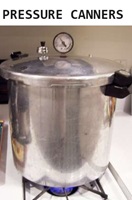
Pressure canners for gas, electric and induction stoves: Presto 23Qt or T-fal 22Qt
Canning scoop (this one is PERFECT)
Ball Blue book (most recent version)
Find Other types of farms:
- Easter egg hunts
- Children's consignment sales
- Farm markets and roadside stands
- Road trips and camping resources
- Local Honey, apiaries, beekeepers
- Local Meat, Milk and Eggs
- Consumer fraud and scams information
- Home canning supplies at the best prices on the internet!
- Maple Syrup Farms, sugarworks, maple syrup festivals
- Environmental information and resources
- Farms For Your Event for birthday parties, weddings, receptions, business meetings, retreats, etc.
- Festivals - local fruit and vegetable festivals
- Pumpkin patches and corn mazes
- Christmas Tree Farms and lots
Get the
most recent version of
the Ball Blue Book
Get the
most recent version of
the Ball Blue Book of Home Canning
Find other types of farms:
- Easter egg hunts
- Children's consignment sales
- Farm markets and roadside stands
- Local Honey
- Local Meat, Milk and Eggs
- Road trip and camping
- Pumpkin patches and corn mazes
- Christmas Tree Farms and lots
- Maple Syrup farms and sugarworks
Highly rated canning supplies:
- Regular Mouth Canning Lids with food-grade with BPA Free Silicone seals for Ball, Kerr Jars for Canning
- Canning accessories kit: funnel, jar tongs, lid lifter, etc
- Food Dehydrator, 400W Electric with 8 Trays, 48 hour Timer and Temperature Control 95-176℉, BPA-Free
- Water Bath Canner, 21 Qts with lid, Jar Rack, Speckled Black, cans 7 quart jars, 9 pint jars or 13 half-pint jars
- Air Fryer: Instant Pot Instant Vortex Plus XL 8QT Clear Windows, Custom Programming, 8-in-1 Functions that Crisps, Broils, Roasts, Dehydrates, Bakes, Reheats
- Pressure canner: All American 921, 21.5qt Pressure Cooker/Canner, never needs gaskets, Great for Gas, Electric or Flat Top Stoves - Made in the USA
- The Backyard Homestead:a guide to homesteading , on 1/4 acre, how to raise grains and vegetables; raise animals for meat, eggs, and dairy; and keep honey bees
- Smart silent HEPA Air Purifiers for Home, Large Rooms for Allergies, Smoke, Pets. Eliminates 99.97% of Dust, Pet Hair, Odors