Looking for Raspberry Facts and Picking Tips in 2024? Scroll down this page and follow the links. And if you bring home some fruit or vegetables and want to can, freeze, make jam, salsa or pickles, see this page for simple, reliable, illustrated canning, freezing or preserving directions. There are plenty of other related resources, click on the resources dropdown above. If you are having a hard time finding canning lids, I've used these, and they're a great price & ship in 2 days.
If you have questions or feedback, please let me know! There are affiliate links on this page. Read our disclosure policy to learn more.
What's in season in May 2024, and other timely information:
Notes for May 2024: Spring is here! Strawberry season is here. It started in February in Florida, Texas, southern California and a few other areas of the Deep South; then March along the Gulf coast, April in the Deep South and west coast, May through much of the country, and June in northern areas. Blueberries are next, about a month later. Of course, cool weather crops, like Rhubarb, asparagus and greens should be available almost everywhere. Check your area's crop calendar (see this page) and call your local farms for seasonal updates.
Are carpenter bees boring holes into your house, shed or barn? There is a simple non-toxic solution!
You may also be interested in finding a local:
- Children's Consignment Sale happening now; save money on children's clothes, toys, books, etc, find a local children's consignment sale, also often held by churches in the Spring and Fall, click here!
- Fun factory tours - usually free, fun and educational, find them in every state here!
- Road trip or a Camping trip - Find free and low-cost, but fun, interesting places to visit and things to do and see!
We also have home canning, preserving, drying and freezing directions. You can access recipes and other resources from the drop down menus at the top of the page or the site search. If you have any questions or suggestions, feel free to write me! It is easy to make your own ice cream, even gelato, or low fat or low sugar ice cream - see this page.
NEW! Start your own tomato, pepper, squash and other vegetable plants from seed - It's easy and
costs about 50 cents per plant.
Also see our Master list of tomato varieties,
with descriptions, details and links to ordering the seedss.
Also note, there are many copycat website listing U-pick farms now. They have all copied their information from here and usually do not ever update. Since 2002, I've been updating the information every day but Christmas; so if you see anything wrong or outdated, please write me!
Raspberry Facts and Picking Tips
Raspberry Facts and Picking Tips
Raspberries can produce an early summer crop or a late summer and Fall
crop.
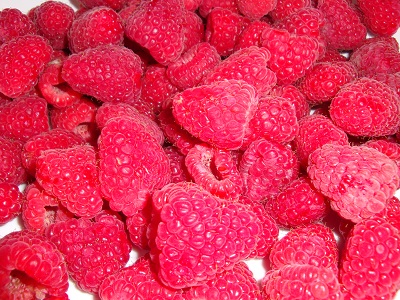 In
the U.S. Spring / Summer raspberries (called florocanes) typically peak during June in the South, and in July in
the North. The primocane varieties, which produce raspberries on shoots that
come up each Spring are typically read from August until frost.
In
the U.S. Spring / Summer raspberries (called florocanes) typically peak during June in the South, and in July in
the North. The primocane varieties, which produce raspberries on shoots that
come up each Spring are typically read from August until frost.
In addition to the variety a farm plants, the berries are ready at various times depending the local climate, such as which part of the state you are located. See this page for a list of raspberry festivals around the U.S.
And for those of you from the upper midwest through the west and up to Canada, if you are interested in Thimbleberries, see this page.
Raspberry Facts
- Raspberries are a very healthy food; packed with anthocyanins!
- Raspberries contain more vitamin C than oranges, are super high in fibre, lhave a good amount of folic acid, are high in potassium, vitamin A and calcium.
- The USDA says 1 cup of raspberries has about 62 calories.
- 11 cup of raspberries, not packed down weighs about 140 grams.
- An average raspberry has 100 to 120 seeds.
- Select plump, firm, fully raspberries. Unripe berries will not ripen once picked.
- Raspberries belong to a large group of fruits known as brambles, such as blackberries, in the plant genus Rubus.
- Raspberries come in red, yellow, orange, purple and black colors.
- Yellow raspberries are red raspberries that don't make red pigment.)
- In most areas, raspberries begin to bloom in late May or early June.
- Bumblebees, honeybees, and other wild bees love to visit brambles.
- 60-70 pints of fruits can be
harvested from 100 feet row.
Raspberries can be harvested from early summer through fall, usually right up until a freeze - The United States is the world's third-largest producer of raspberries (FAOSTAT, 2013).
- Production occurs across much of the country, although most of it is concentrated in California, Oregon and Washington. California leads the nation in both black and red raspberry production (NASS, 2015).
- According to the most recent Census of Agriculture, the United States has 8,052 raspberry farms totaling 23,104 acres (Census of Ag, USDA, 2012).
- U-pick raspberry farms typically sell berries by the pound. A quart equals 1 and 1/4 pounds of fresh berries.
- Do the math and be careful not to over-purchase as raspberries quickly mold when left at room temperature, and only last a couple of days in the refrigerator.
- You can easily freeze berries that you cannot use right away - just wash, cut the hulls off and pop them into a ziplock bag, removing as much air as possible. Those vacuum food sealers REALLY do a good job of this! The berries will keep for many months frozen without air.
- Want to go to a raspberry festival? See this page for a list!
Before you leave to go to the farm:
- Always call before you go to the farm - And when they are in season, a large turnout can pick a field clean before noon, so CALL first!
-
 Leave
early. On weekends, then fields may be picked clean by NOON!
Leave
early. On weekends, then fields may be picked clean by NOON!
-
Most growers furnish picking containers designed for raspberries, but they
may charge you for them; be sure to call before you go to see if you need to
bring
containers.
If you use your own containers, remember that heaping raspberries more than 5 inches deep will bruise the lower berries. Plastic dishpans, metal oven pans with 3 inch tall sides and large pots make good containers. I like the Glad storage containers like the one at right. - Bring something to drink and a few snacks; you'd be surprised how you can work up a thirst and appetite! And don't forget hats and sunscreen for the sun. Bugs usually aren't a problem, but some deet might be good to bring along if it has been rainy.
Tips on how to pick raspberries
-
Raspberry bushes don't have thorns, but they are a pick prickly, so if you
want to hold the stem while picking, a pair of lightweight gloves is
helpful.
- A ripe raspberry is deep color with a plump, soft but firm feel. It will pull free from the plant with only a slight tug. The center will remain on the plant. Keep in mind, raspberries come in many colors: red, yellow, black, purple, so you want to pick the darker shade of whichever it is.
- Pick only the berries that are fully ripe. Reach in between the stems to grab for hidden berries ready for harvest. Bend down and look up into the plant and you will find loads of berries that other people missed!
- I find it helps to hold the stem with one hand, while picking with the other.
- Repeat these operations using both hands until each holds 3 or 4 berries. Repeat the picking process with both hands.
- Don't overfill your containers or try to pack the berries down. Ideally, the collection containers should be wide so the pberries aren't more than a few deep.
- Pick berries into a shallow container. If they get piled too deep they will crush each other.
- Avoid placing the picked berries in the sunlight any longer than necessary. It is better to put them in the shade of a tree or shed than in the car trunk or on the car seat. Cool them as soon as possible after picking.
When you get home
-
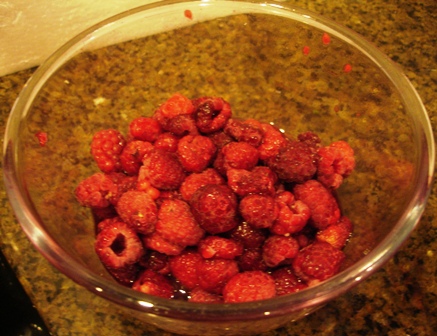 DON'T
wash the berries until you are ready to use them or freeze them. Washing
makes them more prone to spoiling.
DON'T
wash the berries until you are ready to use them or freeze them. Washing
makes them more prone to spoiling. - DO refrigerate! Right after picking, place raspberries in the fridge. If your fridge tends to dry out produce, lightly cover the container.
- Raspberries don't store for very long, usually just a few days. The reason the ones from the grocery store last longer is they are covered with fungicides!
- Pour them out into shallow pans and remove any mushed, soft or rotting berries
- Put a couple of days supply into the fridge, wash off the others, drain them and freeze them up! (Unless you're going to make jam right away) raspberries are less perishable than blueberries or strawberries, but refrigerate them as soon as possible after picking. Temperatures between 34 F and 38 F are best, but, be careful not to freeze the raspberries (while they are in the fridge)!
- Even under ideal conditions raspberries will only keep for a week in a refrigerator, so for best flavor and texture, use them as soon as possible after purchase
- See this page for illustrated freezing instructions.
Raspberry Recipes
- Now, get ready to make raspberry jam - It is VERY easy - especially
with our free
raspberry jam directions - very easy! or for a jam with a little kick, try raspberry chipotle jam - And if you want to freeze them to use later, see my How to freeze berries page.
- You can also make your own raspberry vinaigrette,
- See this page for an easy recipe to make raspberry chipotle sauce
Frequently Asked Questions and Answers About raspberries
- How to freeze raspberries?
Just rinse them in cold water. I use a large bowl filled with water, pour the berries in, and gently stir them with my fingers to dislodge any dirt or bugs. Then using my fingers like a sieve, I scoop the raspberries out of the water, and put them in a drainer to let the water drain off. Then I just pour the berries into a ziploc bags or vacuum sealer bags and pop them in the freezer. After they are frozen, I remove as much air from the bag as possible and seal the bag.
See this page for illustrated freezing instructions. - I have picked my raspberries and have seen little worms. Not sure if
these are fruit flies that have laid eggs in them - or if they are grubs. I
picked some out than froze the berries. I have heard that cold will kill
them or drawn them out. If I make jam the cooked way (not freezer jam) and
some of the grubs/worms are left will it hurt people? I would like to
believe I got them all but fear I did not.
Answer: That sounds like SWD, spotted wing drosophila, the grub or larval form of a fly. Typically, they are about 1/4-inch long. Soaking for an hour or more in salt water (1 cup of slat to the gallon), may help draw them out. Cold would probably kill them, but leave them inside the fruit. I don't imagine they would be harmful if cooked into jam... but I doubt anyone would ask for seconds if they found one. Eeeewwwwww!
See this page about Spotted Wind Drosophila, identification and controls
Other Related Information:
- Compendium of Raspberry and Blackberry Diseases and Insects
- Raspberry Diseases: University of Minnesota
- Michigan State University Verticillium Wilt on Raspberry (University of Wisconsin)
- Viruses on Raspberry (University of Wisconsin)
References
- US Agricultural Census
- University of Minnesota Extension
- University of Illinois Extension
- AGMR.org
- USDA Ag census Fruits, Tree Nuts, and Berries
- USDA - search USDA raspberries
- NC State University Extension
- The Telegraph
Canning booksCanning & Preserving for Dummies by Karen Ward
click here for more information, reviews, prices for Canning
and Preserving For Dummies |
|
The All New Ball Book Of Canning And Preserving: Over 350 of the Best Canned, Jammed, Pickled, and Preserved Recipes Paperback - May 31, 2016This is THE book on canning! My grandmother used this book when I was a child. It tells you in simple instructions how to can almost anything; complete with recipes for jam, jellies, pickles, sauces, canning vegetables, meats, etc. If it can be canned, this book likely tells you how! Click on the link below for more information and / or to buy (no obligation to buy) Click here for more information about the |



Looking for canning equipment and supplies?
Water bath canner with a jar rack
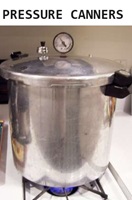
Pressure canners for gas, electric and induction stoves: Presto 23Qt or T-fal 22Qt
Canning scoop (this one is PERFECT)
Ball Blue book (most recent version)
Find Other types of farms:
- Easter egg hunts
- Children's consignment sales
- Farm markets and roadside stands
- Road trips and camping resources
- Local Honey, apiaries, beekeepers
- Local Meat, Milk and Eggs
- Consumer fraud and scams information
- Home canning supplies at the best prices on the internet!
- Maple Syrup Farms, sugarworks, maple syrup festivals
- Environmental information and resources
- Farms For Your Event for birthday parties, weddings, receptions, business meetings, retreats, etc.
- Festivals - local fruit and vegetable festivals
- Pumpkin patches and corn mazes
- Christmas Tree Farms and lots
Get the
most recent version of
the Ball Blue Book
Get the
most recent version of
the Ball Blue Book of Home Canning
Find other types of farms:
- Easter egg hunts
- Children's consignment sales
- Farm markets and roadside stands
- Local Honey
- Local Meat, Milk and Eggs
- Road trip and camping
- Pumpkin patches and corn mazes
- Christmas Tree Farms and lots
- Maple Syrup farms and sugarworks
Highly rated canning supplies:
- Regular Mouth Canning Lids with food-grade with BPA Free Silicone seals for Ball, Kerr Jars for Canning
- Canning accessories kit: funnel, jar tongs, lid lifter, etc
- Food Dehydrator, 400W Electric with 8 Trays, 48 hour Timer and Temperature Control 95-176℉, BPA-Free
- Water Bath Canner, 21 Qts with lid, Jar Rack, Speckled Black, cans 7 quart jars, 9 pint jars or 13 half-pint jars
- Air Fryer: Instant Pot Instant Vortex Plus XL 8QT Clear Windows, Custom Programming, 8-in-1
fruit dehydrator, Crisps, Broils, Roasts, Bakes, Reheats
- Pressure canner: All American 921, 21.5qt Pressure Cooker/Canner, never needs gaskets, Great for Gas, Electric or Flat Top Stoves - Made in the USA
- The Backyard Homestead: a guide to homesteading , on 1/4 acre, how to raise grains and vegetables; raise animals for meat, eggs, and dairy; and keep honey bees
- HEPA Air Purifiers for Home, Large Rooms for Allergies, Smoke, Pets. QUIET, Eliminates 99.97% of Dust, Pet Hair, Odors