Looking for How to Make Your Own Home Canned Peppers in oil - safely (complete directions with photos) in 2025? Scroll down this page and follow the links. And if you bring home some fruit or vegetables and want to can, freeze, make jam, salsa or pickles, see this page for simple, reliable, illustrated canning, freezing or preserving directions. There are plenty of other related resources, click on the resources dropdown above. If you are having a hard time finding canning lids, I've used these, and they're a great price & ship in 2 days.
If you have questions or feedback, please let me know! There are affiliate links on this page. Read our disclosure policy to learn more.
How to Make Your Own Home Canned Peppers in oil - safely (complete directions with photos)
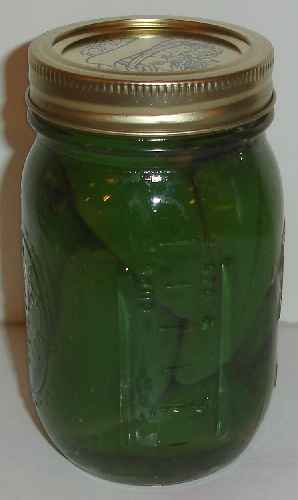 How to Make Homemade Canned Hot Peppers with Oil Hot, including chilies, jalapeno, bell, banana and pimiento peppers
Click here for a PDF print version
You can make and can your own peppers with oil impossible? If not done carefully with a tested recipe from an authoritative source, yes. But here is a recipe from a university (Colorado State) that tested the outcome.
There are some tricks to it: using vinegar to acidify and adding only a limited amount of oil AND you really do need a water bath canner OR a Pressure Canner. So, here's how to can peppers! The directions are complete with instructions in easy steps and completely illustrated. In the winter when you open a jar, the peppers will taste MUCH better than any store-bought canned peppers.
Background and safety information
Peppers and oils are both low-acid and together could support the growth of the disease-causing Clostridium botulinum bacteria. Specific problems exist when canning pickled peppers in oil. Follow the recommended amount of oil (2 tablespoons per pint) and allow proper headspace. Peppers in oil need additional processing time over recipes not containing oil. If peppers to be home-canned contain oil, take care that no ingredients touch the jar rim or flat lid. The oil tends to soften the natural rubber-based lining found in some brands of home-canning lids and may result in loosening of the seal over time.
Prepared this way, the jars have a shelf life of about 12 months, and aside from storing in a cool, dark place, require no special attention.
Directions for Making Home-Canned Hot Peppers Marinated in Oil
Yield: Makes 7 to 8 pints
Ingredients and Equipment
- 3 pounds hot peppers (Jalapenos or other varieties)
- 7 to 14 cloves garlic
- 7 tablespoons dried oregano
- 5 cups vinegar (5% strength; red wine, apple or clear)
- 1 cup water
- 1 tablespoon plus 1 teaspoon pickling salt
- 3/4 cup vegetable or olive oil
- Jar grabber (to pick up the hot jars)
- Jar funnel ($4 at mall kitchen stores and local "big box" stores, but it's usually cheaper online from our affiliates)
- Canner
- 1 large pot
- Large spoons and ladles,
- Canning jars (often called Ball jars, Mason jars or Kerr jars) (Publix, Kroger, other grocery stores and some "big box" stores carry them - now about $12 per dozen quart jars (up 50% in 2 years!) including the lids and rings)
Note: Improper procedures when canning vegetables in oil can result in risk of botulism. Read the section on oil and follow exactly the recommended procedures and tested recipe below.
Recipe and Directions
Step 1 - Selecting the peppers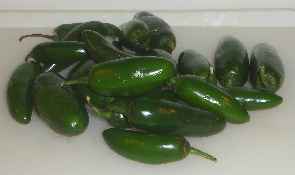
The most important step! You need peppers that are FRESH and crisp. Limp, old peppers will make nasty tasting canned peppers. Guests will probably throw them at you.. Select filled but tender, firm, crisp peppers. Remove and discard any soft, diseased, spotted and rusty pods. Select small peppers, preferably 1 inch to 1 and 1/4-inch in diameter. Larger peppers are often too fibrous and tough.
Hot pepper caution: Wear plastic or rubber gloves and do not touch your face while handling or cutting hot peppers. If you do not wear gloves, wash hands thoroughly with soap and water before touching your face or eyes. Hot peppers can burn your eyes and skin - ever heard of pepper spray?
How many peppers and where to get them
You can grow your own, pick your own, or buy them at the grocery store. An average of 9 pounds is needed per canner load of 9 pints jars. A bushel of peppers weighs 25 pounds and yields 20 to 30 pints canned; an average of 1 pound per pint
Step 2 - Prepare the jars and water bath canner
Wash the jars and lids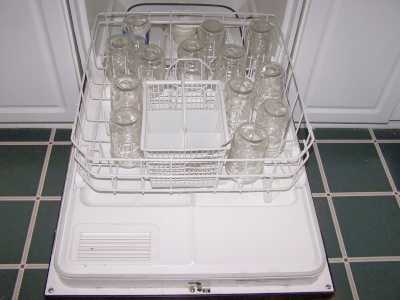
This is a good time to get the jars ready! The dishwasher is fine for the jars; if it has a "sanitize" cycle. Otherwise put the jars in boiling water for 10 minutes. I just put the lids in a small pot of almost boiling water for 5 minutes, and use the magnetic "lid lifter wand" (available from target, other big box stores, and often grocery stores; and available online - see this page) to pull them out.
Get the canner heating up
Rinse out your canner, put it on the stove over low heat, with the
lid OFF of it, just to get it heating up for later on.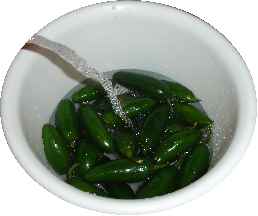
Step 3 -Wash the peppers!
I'm sure you can figure out how to rinse the peppers in plain cold or lukewarm water.
Step 4 -
 Make
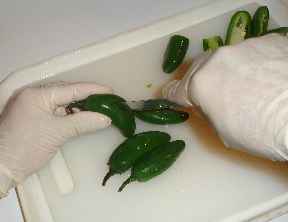
2 slits in each pepper
Make
2 slits in each pepper
Small peppers may be left whole. Large peppers may be quartered. Remove cores and seeds. Slash two or four slits in each pepper
Step 5 - Add the garlic and oregano to the jars
Pack one or two garlic cloves and one tablespoon oregano into each clean, hot, sanitized pint jar.
Step 6 - Pack the jars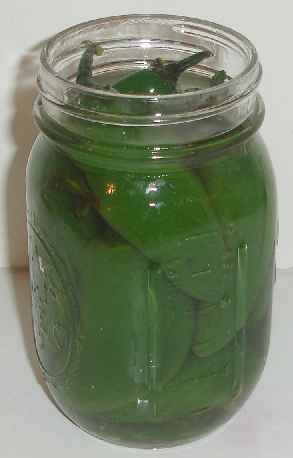
Pack peppers tightly into jars, leaving 1-inch headspace. Flatten whole peppers. You may add 1/2 teaspoon of salt to each pint jar, if desired for taste (it is not a preservative). Be sure to leave 1 inch of space at the TOP of the jar. That is called "headspace" and is needed for expansion during heading.
Step 7 - Heat the vinegar and other ingredients
Combine vinegar, water, salt and oil and bring to a boil. Simmer 5 minutes.
Step 8 - Fill the jars with the hot liquid
Use a ladle or pyrex measuring cup to carefully fill each packed jar with the hot solution, over the peppers, leaving 1-inch headspace. Make sure the oil is equally distributed across jars. There should be no more than two tablespoons of oil per pint. The peppers should be covered and there should still be 1 inch of airspace left in the top of each jar. Be careful not to burn yourself, (or anyone else - children should be kept back during this step!)
Step 10 - Put the lids and rings on
Carefully wipe the jar lip so it is free of all oil. Add the
lids which have been in hot, almost boiling water. Put
the lids on each jar and seal them by putting a ring on and screwing it
down snugly (but not with all your might, just "snug").
Step 11 - Put the jars in the canner and the lid on the canner
Using the jar tongs, put the jars on the rack in the canner. Process in boiling water bath.
Step 12 - Process in the water bath
It will take 15 for pints or 8 ounce jars or 20 minutes for quart jars, from the time the water bath canner returns to a boil Note: the chart below will help you determine the right processing time and pressure, if you are 6,000 feet or more above sea level.
| Recommended process time for hot peppers marinated in oil in a boiling water canner. | ||
| Style of pack/Jar size | Process time at altitudes of: | |
|---|---|---|
| 6,000 ft or less | Above 6,000 ft | |
| Raw: Half-pints or pints Quarts |
15 min. 20 min. |
20 min. 25 min. |
Step 13 - Remove the jars
Lift
the jars out of the water and let them cool on a wooden cutting board or a
towel, without touching or bumping them in a draft-free place
(usually takes overnight), here they won't be bumped. You can then remove
the rings if you like, but if you leave them on, at least loosen them
quite a bit, so they don't rust in place due to trapped moisture. Once the
jars are cool, you can check that they are sealed verifying that the lid
has been sucked down. Just press in the center, gently, with your finger.
If it pops up and down (often making a popping sound), it is not sealed.
If you put the jar in the refrigerator right away, you can still use it.
Some people replace the lid and reprocess the jar, then that's a bit iffy.
If you heat the contents back up, re-jar them (with a new lid) and the
full time in the canner, it's usually ok. You're done!
For best flavor, store jars five to six weeks before opening.
References:
The recipe on this page was developed and tested by Colorado State University Extension, with the assistance of Master Food Preservers from Pueblo, El Paso, Elbert and Boulder counties.
The recipes were tested at altitudes below and above 5,000 feet, with pH samples conducted in the food science laboratory at Colorado State University. Recipes also were tested for flavor, texture and overall quality to offer a high quality and safe product.
There is always some risk in home canning, but this is not a recipe for beginners and it is presented as is, for information only.
Other Equipment:
From left to right: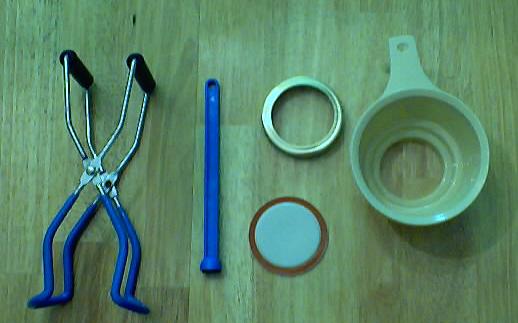
- Jar lifting tongs
helpful to pick up hot jars - Lid lifter
- to remove lids from the pot
of hot water - Lids
- disposable - you may only
use them once - Ring
- holds the lids on the jar until after
the jars cool - then you remove them, save them and reuse them - Canning Jar funnel
- to fill the jars
Frequently Asked Questions
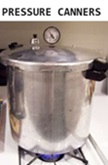
Pressure canners!
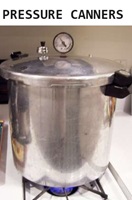
If you want to can low-acid foods such as red meats, sea food, poultry, milk, and all fresh vegetables with the exception of most tomatoes, you will need a Pressure Canner. These foods fit into the low acid group since they have an acidity, or pH level, of 4.6 or greater. The temperature which must be reached and maintained (for a specified amount of time) to kill the bacteria is 240 F. Pressure canning is the only canning method recommended safe by the U.S.D.A. for low-acid foods such as vegetables, meats, and fish. Ordinary water bath canners can only reach 212 F and cannot to kill the types of bacteria that will grow in low acid foods. This temperature can be reached only by creating steam under pressure as achieved in quality pressure canners.
There are several manufacturers of pressure canners. The two leading ones are Presto and All American (Wisconsin Aluminum). They are more expensive than water bath canners, but extremely well built - I bought mine in 1988 and it still looks and works like new!
| See here for related tools, equipment, supplies on Amazon | With a Pressure Canner it's easy. And although a Pressure Canner costs $100 to $200 (see this page for pressure canners models, makes and prices), they last a lifetime, and your children and grandchildren may be using it. Mine is 20 years old and will last my lifetime! You can also find free information from the USDA in this PDF file (it will take a while to load!) about selecting and using canners here! |
Canning Supplies Starter Kit - Canning Jar Lifter, Canning funnel, Scissor Tongs, more

Looking for canning equipment and supplies?
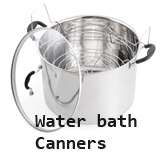
Water bath canner with a jar rack
Pressure canners for gas, electric and induction stoves: Presto 23Qt or T-fal 22Qt
Canning scoop (this one is PERFECT)
Ball Blue book (most recent version)
Jars: 8oz canning jars for jams
Find Other types of farms:
Farm markets and roadside stands
Road trips and camping resources
Local Honey, apiaries, beekeepers
Consumer fraud and scams information
Home canning supplies at the best prices on the internet!
Maple Syrup Farms, sugarworks, maple syrup festivals
Environmental information and resources
Farms For Your Event for birthday parties, weddings, receptions, business meetings, retreats, etc.
Festivals - local fruit and vegetable festivals
Get the
most recent version of
the Ball Blue Book