Looking for Apple Picking Tips in 2024? Scroll down this page and follow the links. And if you bring home some fruit or vegetables and want to can, freeze, make jam, salsa or pickles, see this page for simple, reliable, illustrated canning, freezing or preserving directions. There are plenty of other related resources, click on the resources dropdown above. If you are having a hard time finding canning lids, I've used these, and they're a great price & ship in 2 days.
If you have questions or feedback, please let me know! There are affiliate links on this page. Read our disclosure policy to learn more.
What's in season in April 2024, and other timely information:
Notes for April 2024: Spring is here! Strawberry season is here. It started in February in Florida, Texas, southern California and a few other areas of the Deep South; then March along the Gulf coast, April in the Deep South and west coast, May through much of the country, and June in northern areas. Blueberries are next, about a month later. Of course, cool weather crops, like Rhubarb, asparagus and greens should be available almost everywhere. Check your area's copy calendar (see this page) and call your local farms for seasonal updates.
You may also be interested in finding a local:
- Children's Consignment Sale happening now; save money on children's clothes, toys, books, etc, find a local children's consignment sale, also often held by churches in the Spring and Fall, click here!
- Fun factory tours - usually free, fun and educational, find them in every state here!
- Road trip or a Camping trip - Find free and low-cost, but fun, interesting places to visit and things to do and see!
We also have home canning, preserving, drying and freezing directions. You can access recipes and other resources from the drop down menus at the top of the page or the site search. If you have any questions or suggestions, feel free to write me! It is easy to make your own ice cream, even gelato, or low fat or low sugar ice cream - see this page. Also note, there are many copycat website listing U-pick farms now. They have all copied their information from here and usually do not ever update. Since 2002, I've been updating the information every day but Christmas; so if you see anything wrong or outdated, please write me!
Picking Apples: Tips and Tricks to Getting the Best Apples
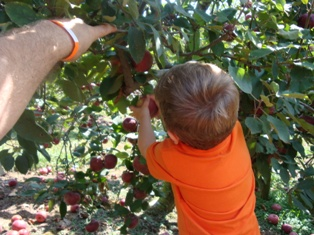 Apples
are one of the easiest fruit to pick and use. They're big, not easily
bruised, most varieties store well, they can be eaten fresh, cooked, canned,
frozen and made into many tasty and healthy dishes. Apples are fat-free, low
sodium, and cholesterol-free. A bushel weighs between 42 and 48 lbs and
typically has 85 to 95 apples, depending on their size. And
if you're looking for many, many facts
about apples, see this page!
Apples
are one of the easiest fruit to pick and use. They're big, not easily
bruised, most varieties store well, they can be eaten fresh, cooked, canned,
frozen and made into many tasty and healthy dishes. Apples are fat-free, low
sodium, and cholesterol-free. A bushel weighs between 42 and 48 lbs and
typically has 85 to 95 apples, depending on their size. And
if you're looking for many, many facts
about apples, see this page!
Where to find an Apple Orchard
See these pages to find a local pick your own apple orchard!
[ Alabama ] [ Alaska ] [ Arkansas ] [ Arizona ] [ California ] [ Colorado ] [ Connecticut ] [ Delaware ] [ Florida ] [ Georgia ] [ Hawaii ] [ Idaho ] [ Illinois ] [ Indiana ] [ Iowa ] [ Kansas ] [ Kentucky ] [ Louisiana ] [ Maine ] [ Massachusetts ] [ Michigan ] [ Minnesota ] [ Mississippi ] [ Missouri [ Montana ] [ Nebraska ] [ Nevada ] [ New Hampshire ] [ New Jersey ] [ New Mexico ] [ New York ] [ North Carolina ] [ North Dakota ] [ Ohio ] [ Oklahoma ] [ Oregon ] [ Pennsylvania ] [ Rhode Island ] [ South Carolina ] [ South Dakota ] [ Tennessee ] [ Texas ] [ Utah ] [ Vermont ] [ Virginia ] [ Washington State [ West ] [ Wisconsin ] [ Wyoming ]
Picking tips:
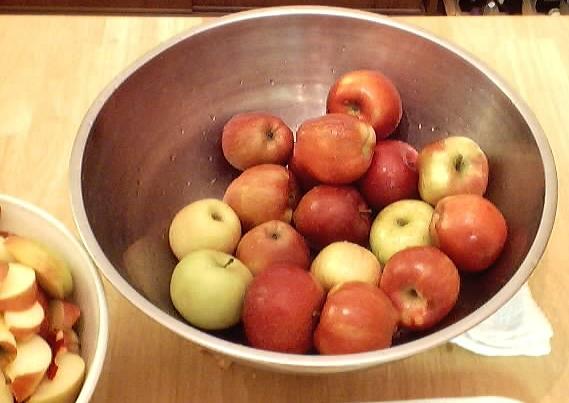 Most modern apple orchards have dwarf trees that are very close to the ground -
my 3 year old found it easy to pick apples! (photo above and below)
Most modern apple orchards have dwarf trees that are very close to the ground -
my 3 year old found it easy to pick apples! (photo above and below)
Select firm, bruise-free apples. The color can be anything from dark green, to yellow, pink, orange, bright red, dark red or even a combination. It all depends on the variety. And color is not really how you tell when an apple is ripe. Apples should be crisp and firm.
The key will be to ask the farmer which are ripe. He will know because it is calculated from the number of days since the trees flowered. And he will track that date carefully , if he's a good apple grower!
The farmer will also know what characteristics to look for in the particular varieties that he is growing.
When are apples ripe - how to tell!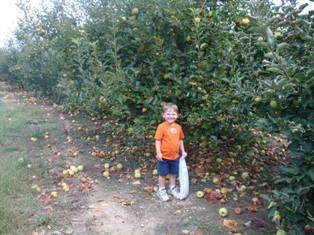
Apples ripen from the outside of the tree towards the center, so the apples out the outside of the tree will ripen first. Once they are picked, they stop ripening. Picking apples directly from a tree is easy. Roll the apple upwards off the branch and give a little twist; don't pull straight away from the tree. If two apples are joined together at the top, both will come away at the same time. Don't shake the trees or branches. If the apple you are trying to pick drops, (or others on the tree) go ahead and pick it up. They're perfectly fine! But do wash them before you eat them!
A visitor who grew up on an orchard says to try to leave the stem on the apples. He says that helped them store longer!
You may have read on a website somewhere that you can buy unripe apples and ripen them at home. Nope, not really. See this page for an explanation along with references and links to sources.
It's all about the variety!
Of the apple, that is. You really need to choose the type of apple that is best suited for your purpose. Apples can be suited for eating fresh, cooking, baking, applesauce, storing, etc. I have a fairly extensive guide to apple varieties here!
More Tips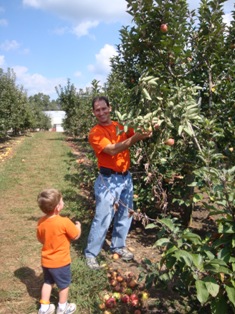
- Once picked, don't throw the apples into the baskets, place them in gently, or they will bruise and go bad more quickly.
- Don't wash apples until just before using to prevent spoilage.
- For an explanation of why apple slices turn brown and how to stop it, see this page!
-
Keep apples cool after picking to increase shelf life. A cool
basement is ideal, but the fruit/vegetable drawer of a refrigerator will
work, too. Kept cool, fresh-picked apples will generally keep weeks, but it
DOES depend on the variety. Red and Yellow Delicious apples do not keep
well, for example; but Fuji and Rome, do!
High humidity helps to to keep the apples from shriveling, but don't let them get actually wet. A wet towel placed nearby helps to keep the humidity up. A refrigerator is fine for small quantities of apples. Boxed apples need to be kept in a cool, dark spot where they won't freeze. Freezing ruptures all of an apple's cells, turning it into one large bruise overnight. The usual solution is to store apples in a root cellar. But root cellars often have potatoes in them: apples and potatoes should never be stored in the same room because, as they age, potatoes release an otherwise ethylene gas, which makes apples spoil faster. If you can keep the gas away from your apples, they will keep just fine. Just don't store them right next to potatoes.
Prevent contact between apples stored for the winter by wrapping them individually in sheets of newspaper. The easiest way to do this is to unfold a section of newspaper all the way and tear it into quarters. Then stack the wrapped apples - Apples don't improve or "ripen" after being picked - this is an urban myth - see this page for the truth - with references!
- Nutrition and miscellaneous facts: One-half cup of apples is only 42 calories. Apples contain no cholesterol or fat and are also low in calories. Apples are high in dietary fiber, Vitamin A and niacin. They contain iron and other trace minerals and are a fair source of Vitamin C.
- Apples are ranked No. 1 in antioxidant activity compared with 40 other commercially available fruits and vegetables. That means a serving of apples has more of the antioxidant power you need to fight aging, cancer and heart disease.
- Put this in your pipe! Indians in the Northwest Territory smoked wild apples to preserve them for the winter. (Bet you didn't know that!)
Choosing and storing apples
- Summary table of many apple varieties and their characteristics
- Detailed descriptions of each apple variety with detailed characteristics
- Apple varieties, sorted by the order in which they typically ripen
- Current apple prices
- How to store apples at home
- How to tell when apples are ripe
- Apple varieties that don't turn brown when they are cut
- Why are some apples brown or spotted inside when you first cut them open?
Using fresh apples and miscellaneous
- How to stop cut apples from browning
- Apple festivals - find one near you!
- Apple facts
- Apple seeds and cyanide
Canning apples - fully illustrated, with step-by-step instructions
- How to make applesauce
- How to make apple butter
- How to make apple jelly
- How to make apple pie filling (canned)
- How to can apples
- Home canned apple juice
Recipes, illustrated with step by step instructions
- Apple pie recipe and directions and illustrated! I can say, with, ahem, no bias at all, that this is the best apple pie recipe in the world! (Alright, I did have an apple strudel in Vienna once at that place listed in Fodors that was REALLY good, but that wasn't a pie, was it? And since this was the recipe my grandmother used, it must be great!)
- How to make applesauce for a single meal (not canning it) with NO special equipment
- Apple cobbler
- Apple crunch - best of all! Moist, low sugar and using oats!
- Apple crisp - ever-popular, low sugar and using oats!
- Apple, blackberry, cherry, and/or peach cobbler
- Apple-blackberry, crumble - a English favorite (or favourite)
Weights and Approximate Typical Processed Yields of Apples
|
You should get this much... |
|||
|
Commonly made products |
|||
|
(42-48 lbs) (85 to 95 apples) |
1 bushel = 12 to 15 qt.
canned applesauce (no sugar added), 14 - 18 with sugar
1 bushel = 10 to 12 qt. juice |
||
|
|
1 quart applesauce | 2 pints | |
| 8 medium apples = 2.25 lbs | 1 nine-inch apple pie or 3 cups of applesauce |
||
| 1 peck = 10 to 14 lbs | 1
peck makes = 3 or 4.5 qts.
canned applesauce (no sugar added), 3.3 to 5.5 with sugar
1 peck makes 2.5 to 3.5 qt. juice |
3 or 4.5 qts. canned applesauce | |
| 1/2 peck = 5 to 7 lbs | Eat them fresh. Too few to make anything | ||
Apple Festivals
Here is a list of major apple festivals in the U.S., Britain, Australia and other countries. If you know of any more, please write me! Feedback
Want to Grow Your Own Apples?
I do and it's easy and fast. Apple trees I planted in my yard two years ago are bearing several dozen fruit each this year! Here's a guide to selecting a variety to grow and how!
Looking for Apple Cider?
And a fun tour? Check out Cider Mills.com! They list the cider mills where you can go for a tour (and tasting! yum!)
Current Season (2024) Apple News
The U.S. Apple Association's estimate of the size of the 2014 United States apple crop is 263.8 million bushels. The USDA's August 12th estimate was for 259.2 million bushels.
See this page for much more detailed information about the apple crop and apple production trends.

Looking for canning equipment and supplies?
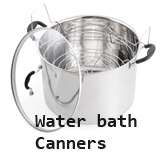
Water bath canner with a jar rack
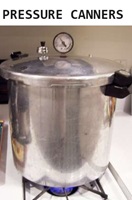
Pressure canners for gas, electric and induction stoves: Presto 23Qt or T-fal 22Qt
Canning scoop (this one is PERFECT)
Ball Blue book (most recent version)
Find Other types of farms:
- Easter egg hunts
- Children's consignment sales
- Farm markets and roadside stands
- Road trips and camping resources
- Local Honey, apiaries, beekeepers
- Local Meat, Milk and Eggs
- Consumer fraud and scams information
- Home canning supplies at the best prices on the internet!
- Maple Syrup Farms, sugarworks, maple syrup festivals
- Environmental information and resources
- Farms For Your Event for birthday parties, weddings, receptions, business meetings, retreats, etc.
- Festivals - local fruit and vegetable festivals
- Pumpkin patches and corn mazes
- Christmas Tree Farms and lots
Get the
most recent version of
the Ball Blue Book
Get the
most recent version of
the Ball Blue Book of Home Canning
Find other types of farms:
- Easter egg hunts
- Children's consignment sales
- Farm markets and roadside stands
- Local Honey
- Local Meat, Milk and Eggs
- Road trip and camping
- Pumpkin patches and corn mazes
- Christmas Tree Farms and lots
- Maple Syrup farms and sugarworks
Highly rated canning supplies:
- Regular Mouth Canning Lids with food-grade with BPA Free Silicone seals for Ball, Kerr Jars for Canning
- Canning accessories kit: funnel, jar tongs, lid lifter, etc
- Food Dehydrator, 400W Electric with 8 Trays, 48 hour Timer and Temperature Control 95-176℉, BPA-Free
- Water Bath Canner, 21 Qts with lid, Jar Rack, Speckled Black, cans 7 quart jars, 9 pint jars or 13 half-pint jars
- Air Fryer: Instant Pot Instant Vortex Plus XL 8QT Clear Windows, Custom Programming, 8-in-1 Functions that Crisps, Broils, Roasts, Dehydrates, Bakes, Reheats
- Pressure canner: All American 921, 21.5qt Pressure Cooker/Canner, never needs gaskets, Great for Gas, Electric or Flat Top Stoves - Made in the USA
- The Backyard Homestead:a guide to homesteading , on 1/4 acre, how to raise grains and vegetables; raise animals for meat, eggs, and dairy; and keep honey bees
- Smart silent HEPA Air Purifiers for Home, Large Rooms for Allergies, Smoke, Pets. Eliminates 99.97% of Dust, Pet Hair, Odors